
Chimney Sweeping, Repair and Duct Cleaning for New York Homes
We clean, inspect and repair chimneys, dryer vents and air ducts in SoHo, Tribeca, Greenwich Village, the West Village, the East Village, the Lower East Side, Chinatown and Gramercy.
- Diagnosis before any repair
- Written price up front
- Written price before we start
Services
Chimney and duct work we do
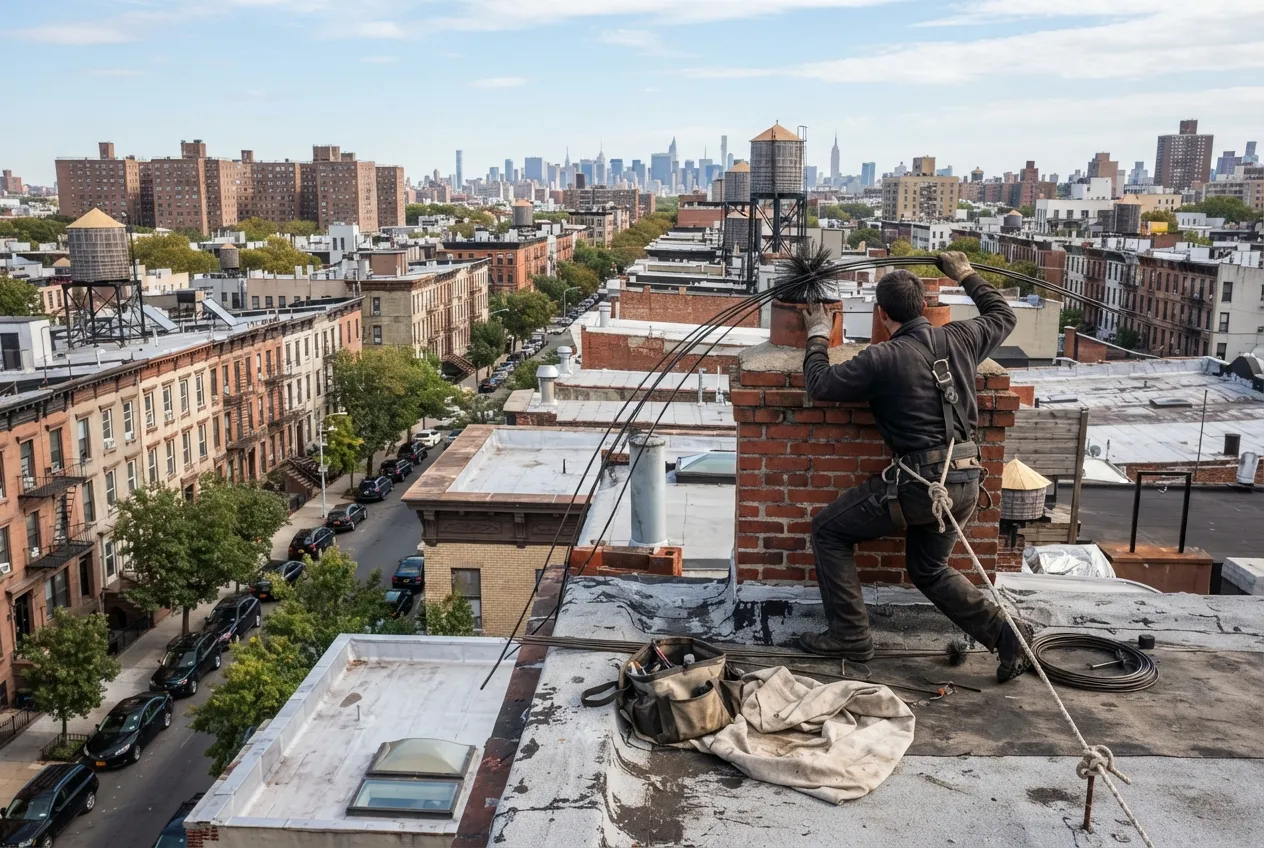
From routine sweeping to liner installation and full rebuilds, we handle the whole venting system: fireplaces, flues, caps, dryer vents and air ducts. Every job starts with a look at the actual condition of your system, so the work matches what your home needs.
Warning signs
Call us if you notice any of these
Most problems give a warning first. Catching them early keeps a small fix from turning into a big one.
- Smoke drifts into the room when the fireplace is lit
- A strong smoky or musty smell comes from the fireplace
- Water stains or dampness on walls near the chimney
- Crumbling mortar, loose bricks or white staining on the chimney
- Clothes take longer than one cycle to dry
- Dust blows out of the vents when the system starts
- We inspect and explain before we recommend any repair.
- You get a written price before any work begins.
- We share photos of what we found inside your chimney or vents.
Straight pricing
No bait prices. No surprises.
-
Written price first
Before any work starts, you get a written description of the job and its price. Nothing begins until you approve it.
-
Photos of our findings
We photograph the conditions we find inside your chimney, vents or ducts, so you can see the problem for yourself.
-
No surprise add-ons
If we find something new during the job, we stop and talk with you first. We don't add work without your approval.
About us
Chimney Work Built Around Older New York Buildings
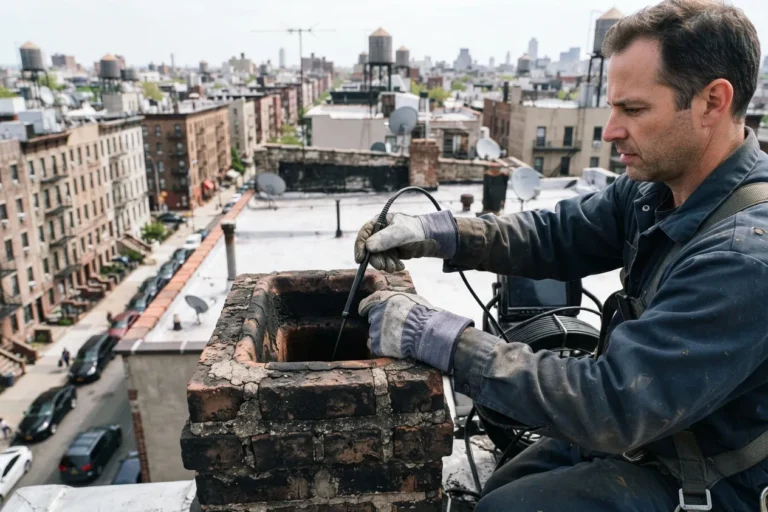
Apex Premier Chimney Services cleans, inspects and repairs chimneys, fireplaces, dryer vents and air ducts in Lower Manhattan homes. Much of our work happens in older masonry buildings, where flues run through shared walls, roofs are reached through hatches, and a small crack can let water or exhaust go where it shouldn't. Our certified technicians start every visit by looking before touching anything. We check the firebox, damper, smoke chamber, flue and the top of the chimney, then explain what we see in plain terms. If something needs repair, you get a written description of the work and a written price before we begin. We protect floors and furniture, contain soot and dust, and clean up when we're done. We also work within building rules, from elevator reservations to quiet hours, because in this city access often matters as much as the job itself. Our goal is a system that vents safely and a homeowner who understands why.
More about how we workHow it works
Clear steps. Your approval first.
-
Book a visit
Call or send a short request: the fireplace, stove, boiler flue or vents you need looked at, and what you have noticed.
-
We inspect first
The crew lays down drop cloths, checks the system top to bottom and runs a camera up the flue where it is needed.
-
Written price, your call
You see photos of what we found and get the price in writing. Work starts only after you say yes.
-
Clean, fix, report
We sweep, repair or reline, vacuum up with HEPA filters and leave you a photo report of the finished work.
Book before the first cold night
Fall is the busiest time for chimney sweeps. Get your sweep and yearly inspection on the calendar before you light the first fire.
Inspections
Three levels of chimney inspection
The NFPA 211 standard calls for a yearly inspection. Which level you need depends on what has changed since the last one.
-
Level 1
Annual check
For a chimney and appliance that have not changed and will be used the same way: the readily accessible parts of the chimney, the flue and the connection, checked for soundness, blockages and deposits.
-
Level 2
Camera inspection
When something changed — a new stove, insert or boiler, a fuel switch such as oil to gas, the sale of the home, or a chimney fire, storm or quake. Adds a video scan of the whole flue and the accessible attic, roof and crawl spaces.
-
Level 3
Concealed areas
Only when a Level 1 or 2 points to a hidden hazard that cannot be checked any other way: parts of the chimney or building are opened to reach it.
Where we work
Every kind of home in New York
-
Rowhouses and brownstones
These homes often have several flues in one shared chimney stack, so we confirm which flue serves which fireplace or appliance before cleaning or repairing. Roof access may be through a hatch, and older masonry often needs careful mortar and crown work.
-
Co-ops and apartment buildings
Work in these buildings usually has to be coordinated with management, including scheduled access, elevator use and work hours. Dryer vents and ducts can run long distances inside walls, which takes more planning to reach and clean.
-
Lofts and converted buildings
Converted commercial and industrial spaces often have older chimneys adapted to new uses, so we check whether the flue and liner suit the current appliance. Long horizontal duct runs and high ceilings also change how we set up and clean.
Service areas
Where we work
We work throughout Lower Manhattan, including SoHo, Little Italy, Hudson Square, Greenwich Village, Tribeca, Civic Center, the West Village, Chinatown, Two Bridges, the East Village, the Lower East Side and Gramercy.
- SoHoLocal service & repairs
- Little ItalyLocal service & repairs
- Hudson SquareLocal service & repairs
- Greenwich VillageLocal service & repairs
- TribecaLocal service & repairs
- Civic CenterLocal service & repairs
- West VillageLocal service & repairs
- ChinatownLocal service & repairs
- Two BridgesLocal service & repairs
- East VillageLocal service & repairs
- Lower East SideLocal service & repairs
- GramercyLocal service & repairs
How often should my chimney be inspected?
The NFPA 211 standard calls for chimneys, fireplaces and vents to be inspected once a year. A yearly check catches buildup, cracks and water damage before they turn into bigger problems.
What are the different levels of chimney inspection?
There are three. A Level 1 inspection is for systems where nothing has changed. A Level 2 inspection is for when something changes, such as a new appliance or a switch of fuel, or when the home is being sold. A Level 3 inspection is for when a hidden hazard has to be reached by opening part of the chimney or building.
Our building is converting from oil to gas. Does the chimney need work?
In New York City, the chimney has to be evaluated as part of an oil-to-gas boiler conversion. A new liner is often needed because gas exhaust produces acidic condensate that can corrode a masonry flue. We can inspect the chimney and explain what your building needs.
Why does dryer vent cleaning matter?
According to the U.S. Fire Administration, failure to clean is the leading factor contributing to clothes dryer fires in homes. Lint builds up in the vent over time, especially in long runs, and cleaning removes it so air can move freely.
Do I need my air ducts cleaned?
The U.S. EPA advises cleaning air ducts when there is substantial visible mold growth, vermin, or excessive dust and debris. It also notes that duct cleaning has not been shown to prevent health problems. We look at your ducts first and tell you honestly whether cleaning makes sense.
Do you use chemical treatments in ducts?
Only when there is a clear reason, and only after we explain the product and you agree. The EPA advises caution with chemical treatments in ductwork, and we follow that approach.
When is the best time to schedule chimney service?
Late spring and summer are often easiest, before New York City's heat season starts on October 1. That leaves time for any repairs before you need your fireplace or heating system.
Will you make a mess in my home?
We cover floors and furniture, contain soot and dust while we work, and clean up before we leave.
Request service
Tell us what’s going on
Share a few details and we’ll call you to confirm the visit. Prefer to talk? (821) 208-8281
Schedule Your Chimney or Vent Service
Tell us what you're noticing, whether it's a smoky fireplace, a slow dryer or dusty vents. We'll inspect, show you what we find and give you a written price before any work begins.