
The short answer
A chimney sweep removes the soot, creosote and debris that build up inside your flue, which helps the chimney draft properly and lowers the risk of a chimney fire. The NFPA 211 standard calls for chimneys to be inspected once a year, and a sweep is recommended when the inspection finds buildup. We sweep and inspect the chimney together in one visit.
A fireplace, wood stove or heating appliance only works safely when the flue can carry smoke and gases out of the house. Every fire leaves soot and creosote on the inside of the flue. Over time that layer narrows the passage, weakens the draft and becomes fuel for a chimney fire. Apex Premier Chimney Services sweeps chimneys for homeowners in New York and nearby cities, including masonry fireplaces in older row houses, wood stoves and the flues that serve oil and gas heating systems. Our certified technicians clean the full length of the flue, check the parts you can't see from the hearth, and tell you plainly what they found. This page covers when a sweep is due, what it includes, how we work inside your home and on the roof, and what affects the cost.
Signs you need a chimney sweep
Many homeowners book a sweep on a yearly schedule. Others call because something about the fireplace has changed. If you notice any of the following, stop using the fireplace or stove until the chimney has been looked at.
- A smoky, tar-like or campfire smell coming from the fireplace, especially on humid days or when the air conditioning is running
- Poor draft: smoke rolls into the room, fires are hard to start, or they burn weakly
- Soot, black flakes, crumbled mortar or pieces of brick or flue tile falling into the firebox
- White, chalky staining on the brick inside or outside the chimney, a sign that moisture is moving through the masonry
- Scratching, chirping or flapping sounds in the chimney from birds, squirrels or raccoons
- Water, rust or damp ashes in the firebox after rain, which can point to a missing cap or a damaged crown
What's included in a chimney sweep
Each sweep includes a basic inspection, so you know the condition of the system along with having it cleaned. Here is what the visit covers.
- Protecting the hearth and nearby floors and furniture with drop cloths
- Sealing off the fireplace opening to contain dust during cleaning
- Brushing the full flue with rotary or manual brushes sized to the liner
- Cleaning the smoke chamber, smoke shelf and damper area
- Removing soot, creosote and loose debris from the firebox
- Checking that the damper opens, closes and seals
- Looking for nesting material and other blockages
- Visually checking the firebox, flue liner, crown, cap and flashing where they can be reached
- A camera inspection of the flue when buildup, damage or a blockage calls for a closer look
- A plain explanation of what we found, with photos when possible
How our crew works in your home and on the roof
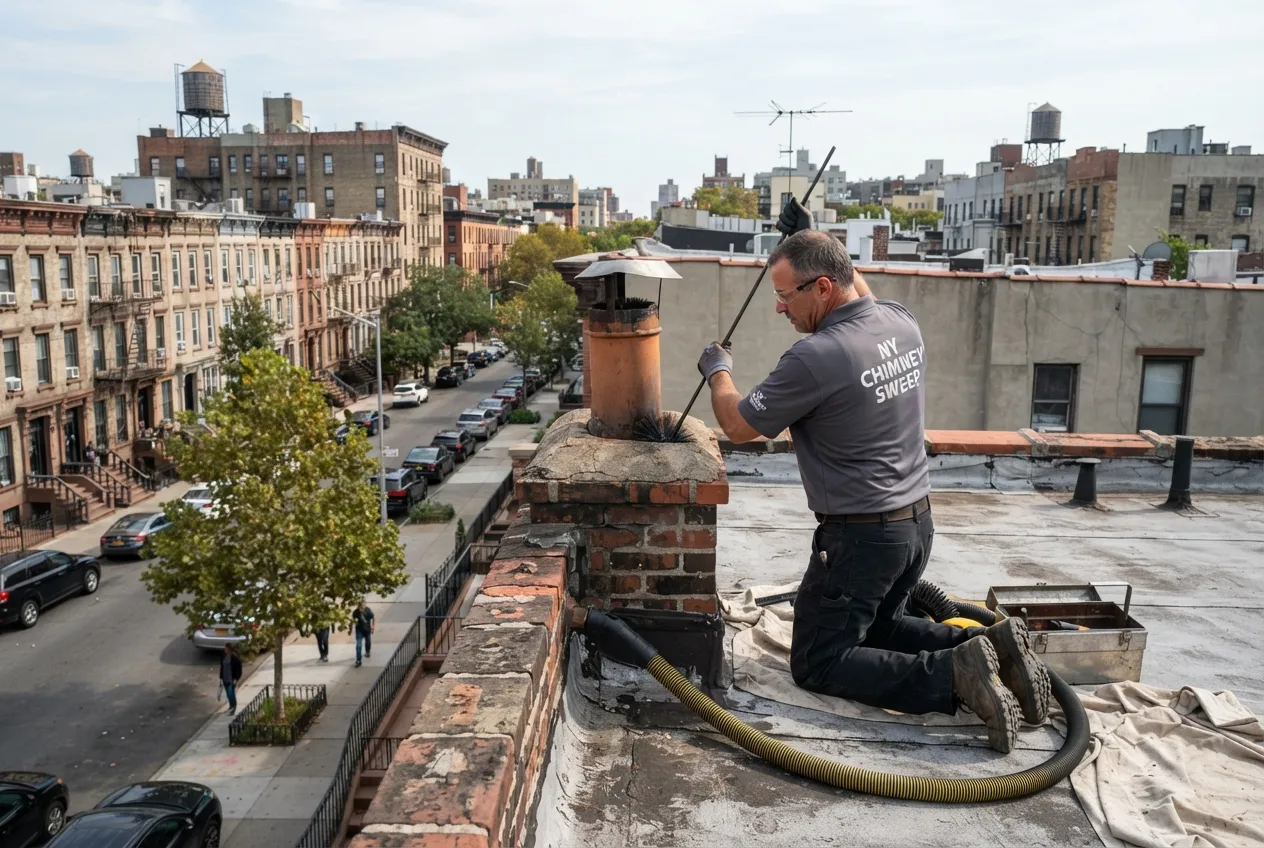
Inside, the technicians lay drop cloths from the door to the hearth and cover the fireplace opening before any brushing starts. A HEPA-filtered vacuum runs during the cleaning to capture fine soot that would otherwise drift into the room. Depending on the flue, we use rotary brushes on flexible rods, which spin to scrape creosote off the liner walls, or traditional wire and poly brushes. When the flue needs a closer look, we run a camera through it to check the liner joints, cracks and spots where creosote has glazed.
On the roof, we check the chimney from the top down. That includes the cap and screen, the crown, the flashing where the chimney meets the roof, and the condition of the brick and mortar. In some homes the safest way to clean is from the roof, and in others it is from the firebox. The crew decides based on roof pitch, height and access. We only go on the roof when it is safe to do so, and we will tell you if weather or access means part of the inspection needs a different approach.
The standard we follow
We follow the NFPA 211 standard, which calls for chimneys, fireplaces and vents to be inspected once a year. Chimney professionals use three inspection levels. A Level 1 inspection fits when nothing about the system has changed. A Level 2 inspection is called for when the system changes, such as a new appliance or a switch of fuel, or when the home is being sold. A Level 3 inspection is used when a hidden hazard can only be reached by opening part of the chimney or the building.
Fuel changes matter in New York. When a building converts its boiler from oil to gas, the chimney has to be evaluated as part of the work. A new liner is often needed, because gas exhaust produces acidic condensate that can corrode a masonry flue. If you are planning a conversion, we can sweep and evaluate the chimney before the new equipment goes in.
What affects the price
Every chimney is different, so we price the job after we learn about yours. These are the main factors.
- The height of the chimney and how hard it is to reach the roof
- The fuel the flue serves: wood, oil or gas
- The size, shape and condition of the flue and liner
- How much soot and creosote has built up, including glazed creosote that takes extra work to remove
- Whether a camera inspection is needed
- Whether repairs are needed, such as a new cap, crown work or liner work
How a visit works
When you contact us, we ask what kind of fireplace or appliance you have, when it was last cleaned, and whether you have noticed any of the warning signs above. Please let the fire go out and the ashes cool for at least a day before we arrive. On the day of the visit, the technicians set up protection, sweep and inspect the chimney, clean up the work area, and then walk you through what they found. If repairs are recommended, we explain why and what your options are before any further work is scheduled.
Our schedule gets busy in the fall. New York City's heat season runs from October 1 through May 31, and many homeowners and building owners want their chimneys and heating flues checked before it starts. Booking in late spring or summer usually gives you more choice of appointment times.
Chimney Sweep by city
- Chimney Sweep in SoHoLocal service & repairs
- Chimney Sweep in Little ItalyLocal service & repairs
- Chimney Sweep in Hudson SquareLocal service & repairs
- Chimney Sweep in Greenwich VillageLocal service & repairs
- Chimney Sweep in TribecaLocal service & repairs
- Chimney Sweep in Civic CenterLocal service & repairs
- Chimney Sweep in West VillageLocal service & repairs
- Chimney Sweep in ChinatownLocal service & repairs
- Chimney Sweep in Two BridgesLocal service & repairs
- Chimney Sweep in East VillageLocal service & repairs
- Chimney Sweep in Lower East SideLocal service & repairs
- Chimney Sweep in GramercyLocal service & repairs