
The short answer
Fireplace and damper repair fixes the parts that control smoke, draft, and heat loss: the firebox brick and mortar, the damper, the smoke chamber, and the cap that keeps out water and animals. If your fireplace smokes, leaks, smells, or won't seal, a technician should inspect it before you light another fire.
A fireplace that pushes smoke into the room, a damper that won't close, or brick crumbling at the back of the firebox is more than an annoyance. These problems let heat escape all winter, let rain and animals inside, and can let hot gases reach parts of the house they were never meant to touch. Apex Premier Chimney Services repairs fireplaces and dampers for homeowners in New York and nearby cities, from parlor-floor fireplaces in older row houses to masonry chimneys on single-family homes. Our certified technicians find the cause first, show you what they found, and make the repair without leaving a mess behind.
Signs your fireplace or damper needs repair
Most fireplace problems give some warning before they turn serious. If you notice any of the following, stop using the fireplace and have it looked at. Many of these signs share one root cause, such as a failing damper or water getting into the masonry, so a single visit can often explain several symptoms.
- Smoke drifts into the room when you light a fire, or a smoky or creosote smell lingers afterward, often worse on humid days
- Poor draft: fires are hard to start, burn weakly, or die down even with dry, seasoned wood
- Brick flakes, crumbled mortar, or loose pieces on the firebox floor
- White, chalky staining on the brick, which means water is moving through the masonry
- Water, rust, or damp ash in the firebox after rain or snow
- Scratching, chirping, or nesting sounds above the damper
- A damper handle that sticks, spins freely, or won't close all the way, so you feel cold air coming down the chimney in winter
What fireplace and damper repair includes
Every job starts with an inspection so we repair the actual problem and not just the symptom. What we do after that depends on what we find, and we explain each step before starting. A typical repair visit can include:
- Inspection of the firebox, damper, smoke chamber, and visible flue
- Camera inspection of the flue when the problem can't be seen from the firebox
- Damper repair: freeing a seized damper, realigning the plate, or replacing worn parts
- Damper replacement with a new throat damper or a top-sealing damper mounted at the top of the chimney
- Firebox repair: replacing cracked or loose firebrick and repointing joints with high-heat refractory mortar
- Smoke chamber cleaning and parging where the surface is rough, cracked, or gapped
- Chimney cap and screen check, with repair or replacement to keep out rain and animals
- Sweeping the flue when creosote or debris buildup is present
- Notes and photos of what we found and what we repaired
How our crew works in your home and on the roof
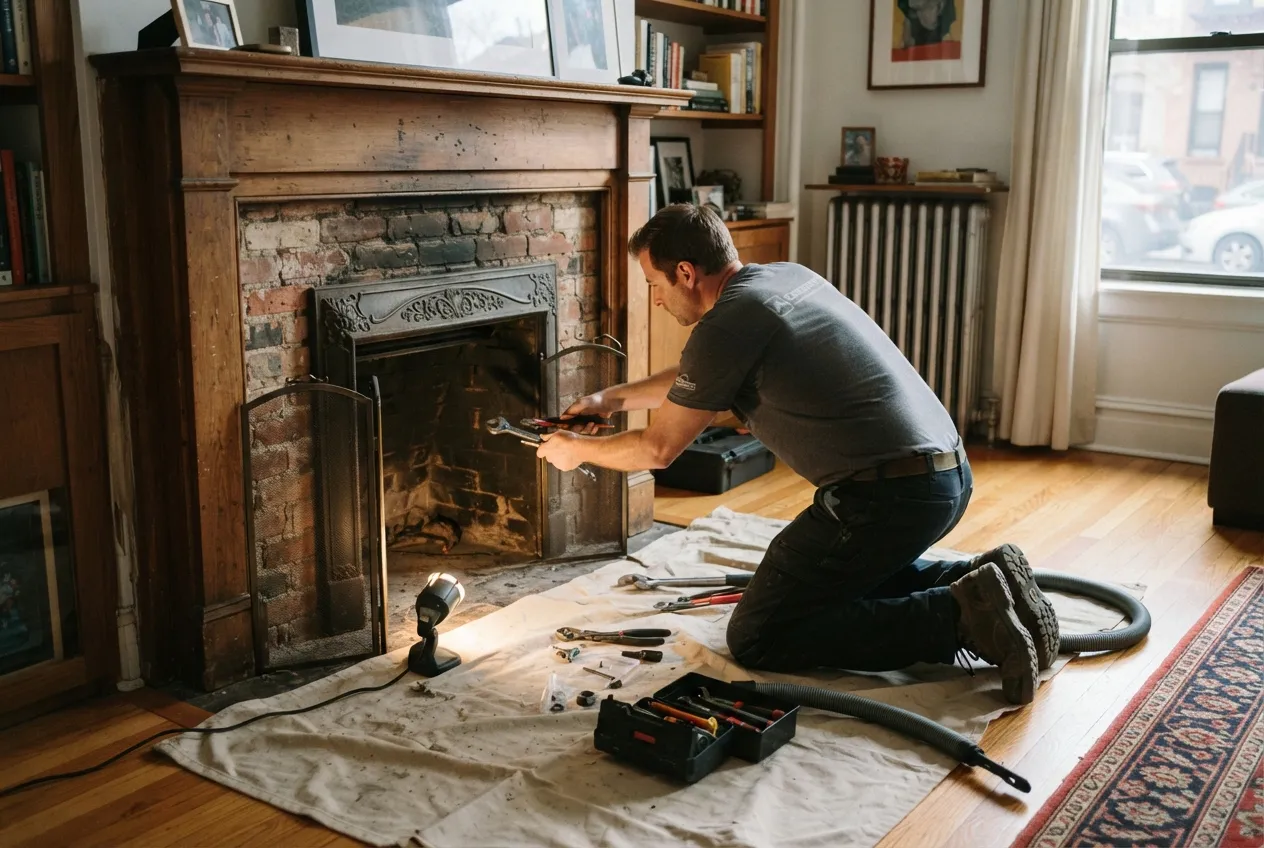
Inside, the crew lays drop cloths from the door to the hearth and covers the fireplace opening before any work begins. HEPA vacuums run while we sweep and remove debris, which keeps soot and brick dust out of the room. When the flue needs cleaning, we use rotary brushes sized to the flue, and when we need to see past the smoke chamber, we run a camera up the chimney so you can see the same view we do.
On the roof, technicians check the crown, cap, and top of the flue, and they install top-sealing dampers and new caps from above. We look at roof pitch and access before climbing and use the right ladders and safety gear for the building. If roof access isn't safe or practical, we'll tell you and explain what can and can't be done from inside.
The standard we follow
The NFPA 211 standard calls for chimneys, fireplaces, and vents to be inspected once a year. Chimney professionals use three inspection levels, and we use them to decide how deep to look. A Level 1 inspection fits when nothing about the system has changed and you use it the same way you always have.
A Level 2 inspection is called for when the system changes, such as adding a gas log set or insert or switching fuel, and when a home is sold. It includes a camera inspection of the flue. A Level 3 inspection is only used when a hidden hazard has to be reached by opening part of the chimney or the building. We don't recommend it unless earlier findings point to a real need.
What affects the cost of fireplace and damper repair
We give you a clear quote after the inspection, before any repair begins. Several factors shape the scope of the job:
- Chimney height and how easy it is to reach the roof
- Fuel type: wood, gas logs, or an insert
- Flue size and the condition of the flue and liner
- How much creosote, debris, or nesting material has built up
- Whether a camera inspection is needed to find the problem
- The type of repair: a damper adjustment, a replacement damper, or rebuilding part of the firebox
How a visit works
When you call, we ask what you've noticed and when it happens, such as smoke on windy days or water after heavy rain. That helps us bring the right parts and tools. On the day of the visit, the technician protects the room, inspects the fireplace and chimney, and walks you through what they found, with photos or camera footage when it helps.
Smaller fixes, like freeing a stuck damper or replacing a few firebricks, can often be done in the same visit. Larger repairs, such as rebuilding a firebox or installing a top-sealing damper, may be scheduled for a return trip so we can bring the right materials. Before we leave, we clean the work area and tell you when it's safe to use the fireplace again.