
The short answer
Dryer vent cleaning removes the lint that builds up inside the duct between your dryer and the outside of your home. According to the U.S. Fire Administration, failure to clean is the leading factor contributing to home clothes dryer fires, so if your loads take longer to dry or the laundry room feels hot, have the vent checked and cleaned.
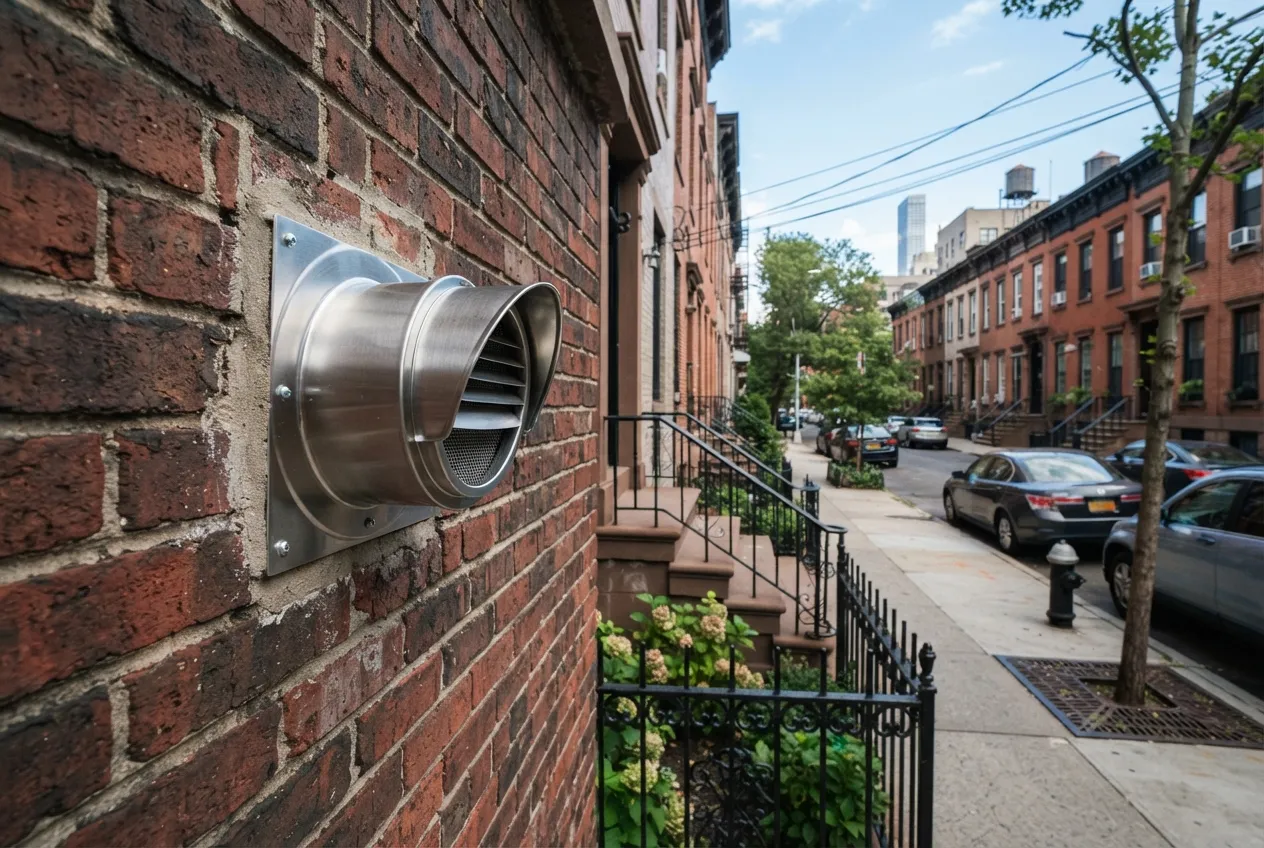
Every load you dry sends hot, damp, lint-filled air through a duct to the outside of your home. In New York brownstones, apartments, co-ops and the houses in nearby cities, that duct often runs through walls, ceilings, closets and sometimes up to the roof, with bends and joints where lint settles. Over time the buildup narrows the passage, so the dryer runs hotter and longer to do the same work. Apex Premier Chimney Services cleans the full vent run, from the connection behind your dryer to the hood or cap where the air leaves the building. Our certified technicians check airflow before and after, so you know the vent is open and the exterior flap is working.
Signs you need it
A clogged dryer vent rarely announces itself all at once. Most owners notice small changes first and get used to them. If any of these sound familiar, it is worth having the vent looked at.
- Clothes take two cycles to dry, or still feel damp after a normal cycle
- The dryer cabinet or the clothes feel unusually hot at the end of a cycle
- A burning or scorched smell in the laundry area while the dryer runs
- Lint or dust blowing out around the dryer door, the back panel or the wall connection
- The laundry room gets humid or warm whenever the dryer is on
- Little or no air coming out of the exterior hood while the dryer runs
- The outside flap stays stuck open or shut, or is packed with lint
- Chirping, scratching or nesting material at the exterior vent, a sign of birds or rodents
What is included
Each dryer vent cleaning covers the whole path the exhaust travels, not just the part you can see behind the machine. Here is what the visit includes.
- Pulling the dryer out carefully and disconnecting the transition hose
- Checking the transition hose for crushing, kinks and the type of material
- Cleaning the lint trap housing and the dryer exhaust outlet we can reach without opening the machine
- Rotary brushing the full duct run from inside to the exterior termination
- Vacuuming loosened lint with a HEPA-filtered vacuum as we work
- Clearing the exterior hood, flap or roof cap, including any nesting material
- A camera look inside the duct where the run is long, hidden or has several bends
- Measuring airflow at the exterior before and after cleaning
- Reconnecting the dryer, running a test cycle and walking you through what we found
How our crew works inside your home and on the roof
Lint is light and spreads easily, so we protect the space before we start. The crew lays drop cloths from the entry to the laundry area and around the dryer. The duct is cleaned with rotary brushes on flexible rods that spin through the run and loosen packed lint from the walls of the pipe. A HEPA vacuum runs at the same time to pull that lint out instead of letting it drift into your home.
Many New York vents do not exit at ground level. In townhouses and some multifamily buildings, the vent travels up through the building and ends at the roof. When that is the case, a technician works from the roof to clear the cap and brush down from the top while another works from below. We only go on the roof when access is safe, and we tell you in advance if we need a building contact or roof key.
Where the duct is concealed in a wall or ceiling, a camera lets us see joints, sagging sections and spots where lint has collected. If we find a crushed section, a disconnected joint or a vent that runs much longer than it should, we show you the footage and explain your options before doing anything beyond the cleaning.
Why regular cleaning matters
According to the U.S. Fire Administration, failure to clean is the leading factor contributing to clothes dryer fires in homes. Lint is dry and burns easily, and a dryer produces a steady stream of heat. When the vent is restricted, that heat has nowhere to go and lint keeps collecting in the same narrow spots.
Cleaning the lint screen after each load helps, but it does not reach the duct. How often the vent needs a full cleaning depends on how much laundry your household does, how long the run is and how many bends it has. A large family with a long rooftop vent will need it more often than a single person with a short wall vent. Our technician can suggest a schedule based on what we find in your vent. Gas dryers also send combustion exhaust through the vent, so keeping that path open matters for them too.
What affects the price
We quote after we understand your setup, because dryer vents vary a lot from home to home. These are the main factors.
- Length of the vent run and the number of bends and turns
- Where the vent ends: a ground-level wall, an upper floor or the roof
- Building height and how easy roof access is
- Whether the dryer is gas or electric
- Size, material and condition of the duct
- How much lint and debris has built up, or whether animals have nested in it
- Whether a camera inspection is needed to see a hidden section
- Any repair, such as replacing a crushed transition hose or a broken exterior hood
How a visit works
When you contact us, we ask where your dryer sits, where the vent exits and whether roof access is involved. That helps us send the right equipment and plan for building rules. On the day of the visit, the technician confirms the plan with you, protects the floors, checks airflow and then cleans the run from end to end.
Afterward we reconnect the dryer, run a short test and check airflow again at the exterior. You get a plain explanation of the vent's condition, any problems we noticed and a suggested time for the next cleaning. If repairs make sense, we describe them and let you decide.