
The short answer
You likely need chimney repair if you see brick flakes or debris in the firebox, white staining on the brick, water in the firebox, or a persistent smoke smell. We inspect the chimney, find the cause, and repair the masonry, crown, flashing, cap, damper, or liner while protecting your home throughout.
A chimney takes a beating in New York. Freeze-thaw cycles crack mortar, wind-driven rain soaks old brick, and years of heat and exhaust wear down the flue from the inside. Small problems tend to grow quietly until water shows up in the firebox or bricks start flaking onto the hearth. Apex Premier Chimney Services repairs chimneys for homeowners in New York and nearby cities, from loose crowns and failed flashing to damaged liners and missing caps. Our certified technicians start by finding out why the damage happened, not just where it shows, so the repair addresses the cause. Below you'll find the warning signs to watch for, what a repair visit includes, how we work in your home and on your roof, and what affects the cost.
Signs You Need Chimney Repair
Most chimney damage starts outside or high up in the flue, where you can't easily see it. The clues usually show up inside the house first. If you notice any of the following, it's worth having the chimney looked at before the next time you light a fire or before heating season starts.
- Brick flakes, mortar grit, or tile pieces collecting in the firebox or on the smoke shelf
- White, chalky staining on interior or exterior brick, a sign that water is moving through the masonry
- Water in the firebox, damp stains on the ceiling or wall next to the chimney, or rust on the damper
- A smoke or creosote smell in the room, especially on humid days or after rain
- Poor draft, with smoke rolling back into the room instead of rising up the flue
- Scratching, chirping, or nesting sounds, which often mean a cap is missing or damaged
- Cracked or crumbling crown, leaning brick, or gaps in the flashing visible from the street or yard
What Our Chimney Repair Includes
Every repair begins with an inspection, because the visible damage is often a symptom of something else. A cracked crown, for example, can let water into the chimney and cause problems several feet below. Depending on what we find, a repair visit can include the following.
- Inspection of the firebox, damper, smoke chamber, flue, and exterior masonry
- Repointing, replacing failed mortar joints with fresh mortar
- Replacing spalled or broken brick
- Repairing or rebuilding a cracked chimney crown
- Resealing or replacing flashing where the chimney meets the roof
- Installing or replacing a chimney cap to keep out rain and animals
- Repairing or replacing a damaged damper
- Relining a deteriorated flue, including liners needed after an oil-to-gas boiler conversion
- Applying a breathable water repellent to exterior masonry where it helps
- A walkthrough of what we did, with photos of areas you can't see yourself
How Our Crew Works Inside Your Home and on the Roof
Inside, we lay drop cloths from the door to the fireplace and cover the hearth and nearby furniture before any tools come out. We seal off the fireplace opening and run HEPA vacuums while we work, so soot and masonry dust stay in the chimney instead of settling in your living room. Rotary brushes clear buildup from the flue so we can see the surface clearly, and we run a camera up the flue to check liner joints, cracks, and gaps that can't be seen with a flashlight.
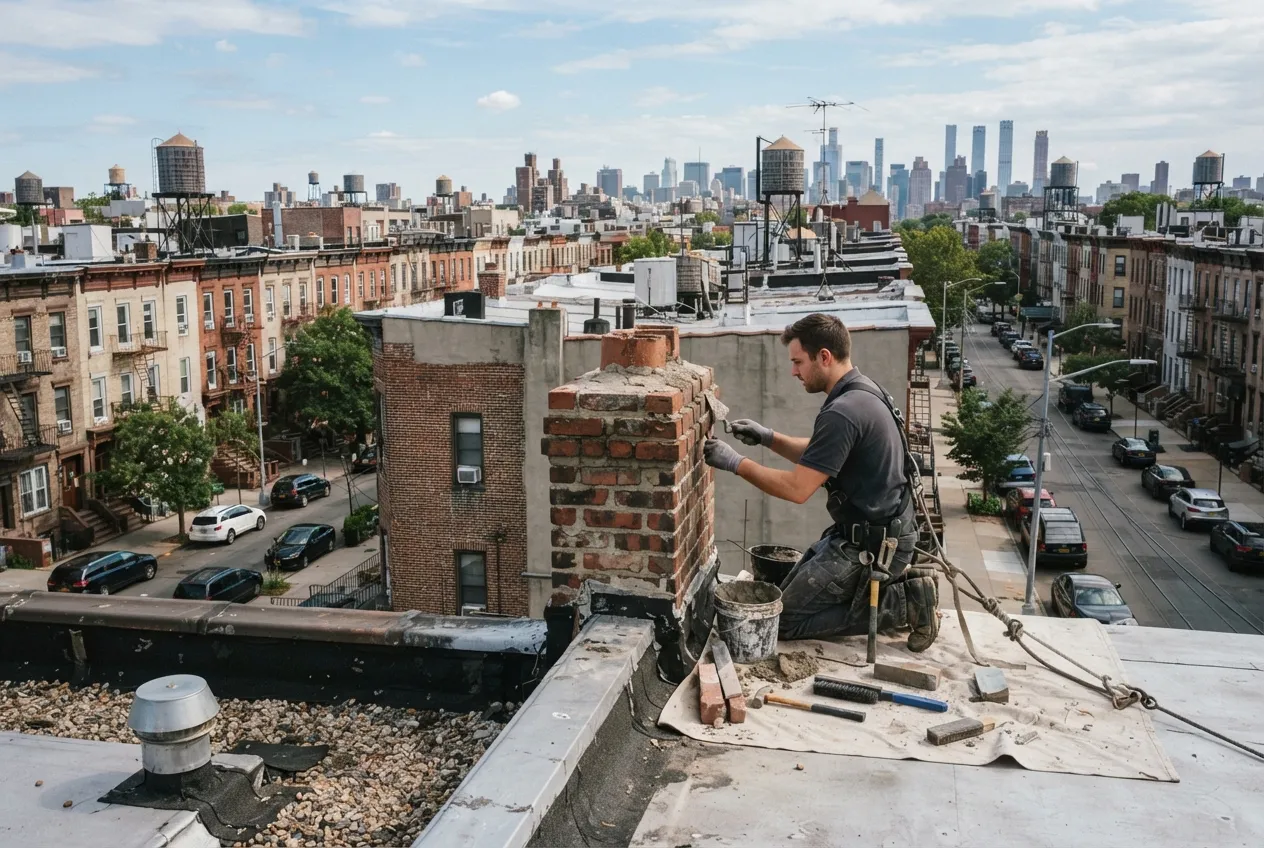
On the roof, we use proper ladders and fall protection and choose access points that avoid damage to shingles, gutters, and flat-roof membranes. We protect the roof surface around the chimney while we cut out mortar or rebuild a crown, and we bag and remove debris rather than dropping it into the yard. Before leaving, we clean up both inside and outside and check that the damper, cap, and flashing are working as they should.
The Standard We Follow
We follow NFPA 211, the national standard that calls for chimneys, fireplaces, and vents to be inspected once a year. Chimney professionals use three inspection levels. A Level 1 inspection covers the readily accessible parts of the chimney and fits when nothing about the system has changed. A Level 2 inspection, which includes a camera look inside the flue, is called for when the system changes, such as a new appliance or a switch in fuel, or when a home is sold. A Level 3 inspection is used when a suspected hidden hazard can only be reached by opening part of the chimney or building.
Fuel changes matter in New York. When a building converts its boiler from oil to gas, the chimney has to be evaluated as part of the work, and a new liner is often needed because gas exhaust produces acidic condensate that can corrode a masonry flue. Because the city's heat season runs from October 1 through May 31, we encourage owners to schedule repairs and relining in the warmer months so heating isn't interrupted.
What Affects the Price of Chimney Repair
Every chimney is different, so we give you a price after the inspection, once we know what the job actually involves. The main factors are listed below, and we'll explain how each one applies to your chimney before any work begins.
- Chimney height and how easy it is to reach the roof safely
- Fuel type: wood, gas, or oil, and whether the fuel is changing
- Flue size, shape, and the condition of the existing liner
- How much soot or creosote buildup has to be removed before repairs
- Whether a camera inspection or a more invasive inspection is needed
- The type and extent of repair, from a few mortar joints to a crown rebuild or full relining
How a Chimney Repair Visit Works
First, we talk with you about what you've noticed and when it happens, such as a smell after rain or debris after a fire. A technician then inspects the chimney inside and out, using a camera where needed, and shows you photos of what we found. We explain the cause, the repair options, and the cost before any work starts. Simple repairs can often be done the same visit. Larger jobs like crown rebuilds or relining are scheduled for a separate day, and we let you know how long the chimney will be out of use. When the work is done, we clean up, walk you through the repair, and tell you when the chimney should be inspected again.
Chimney Repair by city
- Chimney Repair in SoHoLocal service & repairs
- Chimney Repair in Little ItalyLocal service & repairs
- Chimney Repair in Hudson SquareLocal service & repairs
- Chimney Repair in Greenwich VillageLocal service & repairs
- Chimney Repair in TribecaLocal service & repairs
- Chimney Repair in Civic CenterLocal service & repairs
- Chimney Repair in West VillageLocal service & repairs
- Chimney Repair in ChinatownLocal service & repairs
- Chimney Repair in Two BridgesLocal service & repairs
- Chimney Repair in East VillageLocal service & repairs
- Chimney Repair in Lower East SideLocal service & repairs
- Chimney Repair in GramercyLocal service & repairs