
The short answer
A chimney inspection is a systematic check of your firebox, damper, flue, liner, crown, and cap to confirm the system is safe to use. The NFPA 211 standard calls for chimneys, fireplaces, and vents to be inspected once a year, and a more detailed inspection when you change appliances or fuel or sell the home.
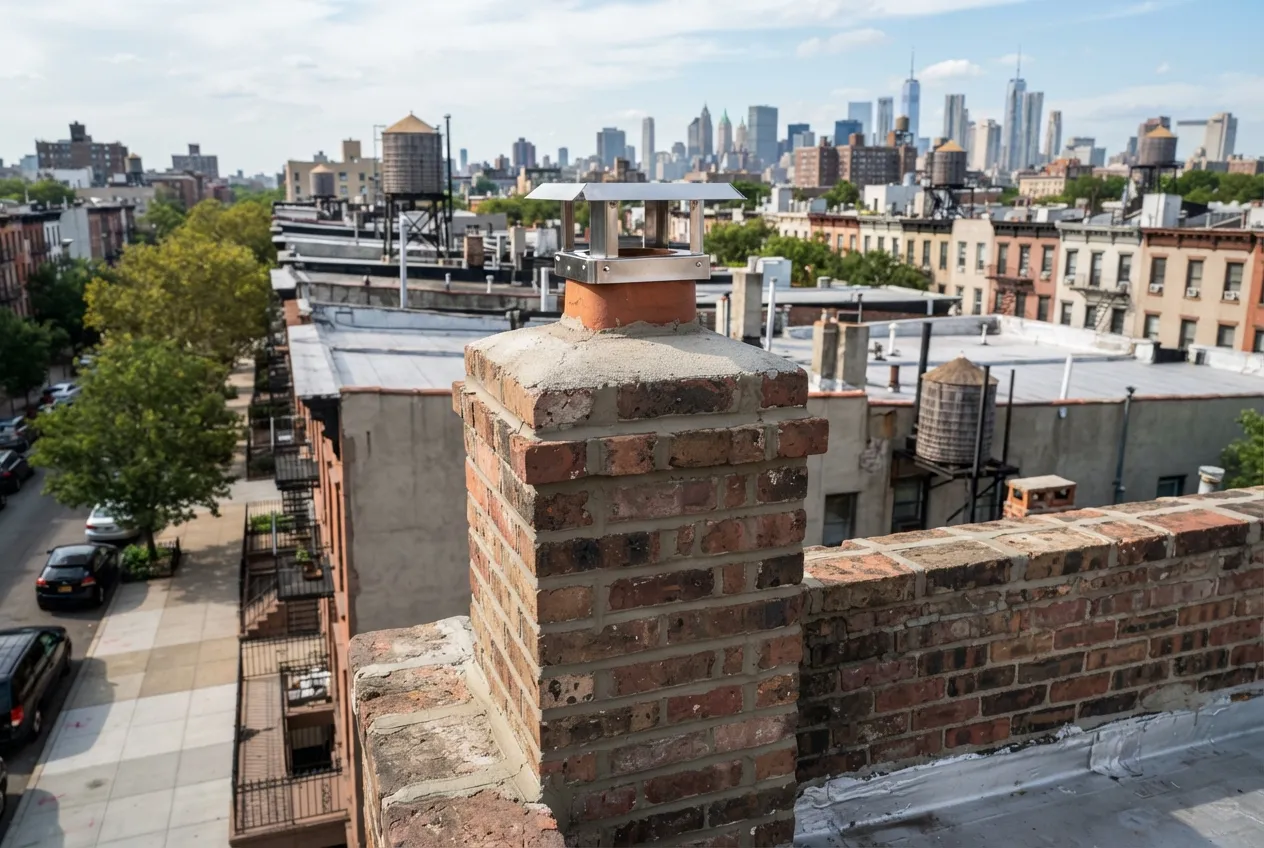
A chimney inspection tells you whether your fireplace, wood stove, or heating flue can safely carry smoke and exhaust out of your home. Our certified technicians examine the system from the firebox to the top of the chimney, photograph what they find, and explain the results in plain language before recommending any work. We serve homeowners in New York City and nearby cities, from rowhouses with shared roof access to detached houses with wood stoves and oil or gas boilers. Whether you burn wood, gas, or oil, a yearly inspection is the simplest way to find cracks, blockages, and moisture damage while they are still small and easier to fix.
Signs You Need a Chimney Inspection
Some chimney problems announce themselves. Others stay hidden until a fire season is already underway. If you notice any of the signs below, schedule an inspection before you light another fire or start the heating season.
- A smoky or tar-like creosote smell, especially on humid days or when the air conditioning is running
- Poor draft: smoke rolls into the room, fires are hard to start, or the stove struggles to stay lit
- Debris, mortar crumbs, or flakes of brick or tile collecting in the firebox
- White, chalky staining on the outside brick, which points to moisture moving through the masonry
- Scratching, chirping, or flapping sounds from birds or animals inside the flue
- Water in the firebox or rust on the damper after rain
- A recent switch of fuel, a new heating appliance, or a home you are about to buy or sell
What Our Chimney Inspection Includes
Every inspection follows the same checklist, so you get a complete picture rather than a quick glance up the flue. Afterward you receive a written summary with photos showing anything that needs attention.
- Firebox: cracked firebrick, gaps in mortar joints, and damaged panels
- Damper: opens, closes, and seals properly
- Smoke chamber and smoke shelf: creosote buildup, debris, and rough or cracked surfaces
- Flue and liner: cracks, missing sections, blockages, and creosote level
- Appliance connections: wood stove, insert, boiler, or furnace connector pipes and how they meet the chimney
- Clearances to combustible materials that can be reached without opening walls
- Exterior masonry: brick, mortar, and signs of water damage or leaning
- Crown, chimney cap, and spark screen
- Flashing where the chimney meets the roof
- Signs of animal entry or nesting
The Standard We Follow: NFPA 211 and the Three Inspection Levels
The NFPA 211 standard calls for chimneys, fireplaces, and vents to be inspected once a year. Chimney professionals use three inspection levels, and we explain which one fits your situation before we start.
A Level 1 inspection is for chimneys in regular use when nothing about the system has changed. A Level 2 inspection is called for when the system changes, such as a new appliance or a switch of fuel, or when the home is being sold. A Level 3 inspection is used when a suspected hazard is hidden and can only be reached by opening part of the chimney or building. We recommend Level 3 only when earlier findings point to a concealed problem.
Fuel changes deserve special attention in New York City. When a building converts its boiler from oil to gas, the chimney must be evaluated as part of the work. A new liner is often needed, because gas exhaust produces acidic condensate that can corrode a masonry flue. If you are planning a conversion, an inspection beforehand helps you plan for the liner work instead of discovering it midway.
How Our Crew Works Inside Your Home and on the Roof
Inside, the crew lays drop cloths from the door to the fireplace or appliance and seals the opening before any work begins. We run HEPA vacuums throughout the visit to capture soot and fine dust. If the flue needs to be cleared so the liner can be seen clearly, we use rotary brushes sized to the flue. When the interior of the flue needs a closer look, as with a Level 2 inspection, we run a camera up the chimney and record the footage so you can see the same images we do.
On the roof, technicians check the crown, cap, flashing, and masonry up close. We set up ladders and roof access with care for gutters, shingles, and neighboring roofs on attached buildings. If weather or roof conditions make access unsafe, we will tell you and reschedule that portion rather than rush it.
What Affects the Price of a Chimney Inspection
Every chimney is different, so we quote after learning about your home. These are the main factors:
- Chimney height and roof access, including steep pitches, multi-story buildings, and shared rooftops
- Fuel type: wood, gas, or oil, and whether more than one appliance shares the chimney
- Flue size, shape, and condition, including unlined or partially lined flues
- How much creosote, soot, or debris has to be cleared before the liner can be seen
- Whether a camera inspection is needed
- Whether the inspection leads to repairs, such as a new cap, crown work, or a liner
How a Visit Works
When you contact us, we ask a few questions: what fuel you burn, when the chimney was last inspected, and whether you have noticed any of the warning signs above. That helps us recommend the right inspection level and send the right equipment.
On the day of the visit, the crew arrives, explains the plan, and protects the work area. The inspection itself usually takes part of a morning or afternoon, depending on the level and how easy the roof is to reach. Before leaving, the technician walks you through the findings and photos, answers your questions, and gives you a written summary. If repairs are recommended, we explain why and what happens if you wait, and you decide when to schedule.
Timing matters in New York City. The city's heat season runs from October 1 through May 31, and booking your inspection in late summer or early fall leaves time to finish any repairs before you need heat.
Chimney Inspection by city
- Chimney Inspection in SoHoLocal service & repairs
- Chimney Inspection in Little ItalyLocal service & repairs
- Chimney Inspection in Hudson SquareLocal service & repairs
- Chimney Inspection in Greenwich VillageLocal service & repairs
- Chimney Inspection in TribecaLocal service & repairs
- Chimney Inspection in Civic CenterLocal service & repairs
- Chimney Inspection in West VillageLocal service & repairs
- Chimney Inspection in ChinatownLocal service & repairs
- Chimney Inspection in Two BridgesLocal service & repairs
- Chimney Inspection in East VillageLocal service & repairs
- Chimney Inspection in Lower East SideLocal service & repairs
- Chimney Inspection in GramercyLocal service & repairs