
The short answer
Apex Premier Chimney Services provides chimney sweeping, inspection, repair, liner installation, dryer vent cleaning and air duct cleaning in West Village, Manhattan (ZIP 10014). Our office is about a mile away, and we recommend booking yearly inspections before New York City's heat season starts on October 1.
Apex Premier Chimney Services works on chimneys, fireplaces, dryer vents and air ducts throughout West Village, Manhattan, in ZIP code 10014. Our Manhattan office is about a mile away, so West Village is one of the areas we reach most easily. Our certified technicians handle sweeping, inspections, masonry and fireplace repair, liner installation, caps, chase covers, waterproofing and full chimney rebuilding. Whether you live in a rowhouse with several fireplaces or a pre-war apartment building with a shared boiler flue, the goal is the same: a venting system that is clean, sound and safe to use.
Chimneys in West Village Homes
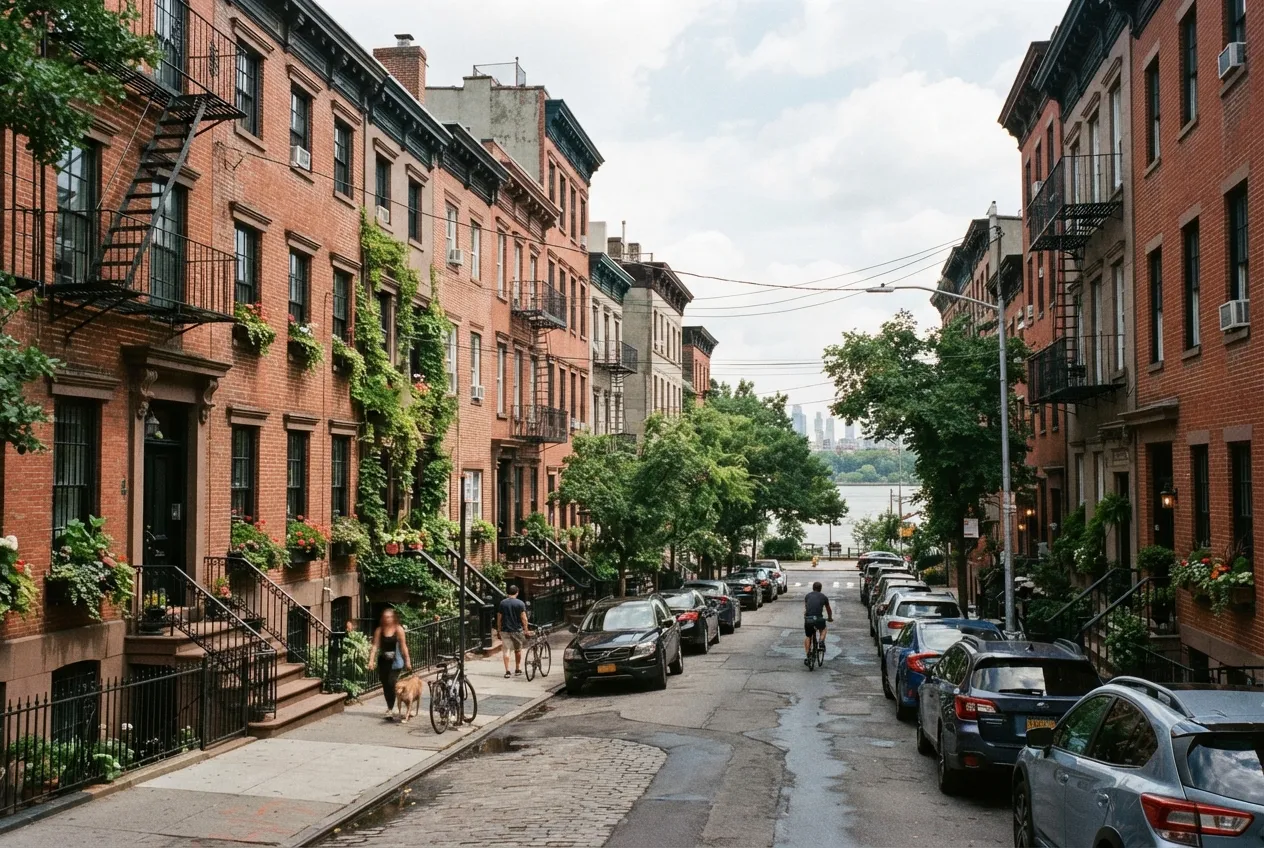
West Village housing is mostly older masonry: rowhouses, brownstones, townhouses and pre-war apartment buildings. Many of these homes have more than one fireplace, with several flues running side by side in a single chimney stack. Some flues were built for coal or wood decades ago and were never lined. Others have been changed over the years as heating systems were replaced.
Older chimneys like these need a careful look, because problems often sit inside the flue where you can't see them. These are the issues we find most often in older Manhattan masonry:
- Cracked or missing clay flue tiles, or flues that were never lined
- Loose bricks and worn mortar joints near the top of the stack
- Damper plates that are rusted shut or no longer seal
- Creosote buildup in fireplaces used regularly in winter
- Debris and nesting material in flues that have sat unused
How New York Weather Wears on Masonry
New York winters bring repeated freeze-thaw cycles. Water soaks into brick and mortar, freezes, expands and slowly pushes the masonry apart. Nor'easters and summer thunderstorms drive rain sideways into chimney crowns and mortar joints. Humid summers keep damp flues from drying out. Over time you may see flaking brick faces, white staining, rust on dampers or water stains on the ceiling or wall near the fireplace.
Keeping water out of the chimney is the best way to slow this damage down. A well-fitted chimney cap keeps rain, debris and animals out of the flue. A chase cover protects framed chimneys. Breathable waterproofing helps brick shed water without trapping moisture inside. When the damage is already advanced, we repair or rebuild the affected sections of the chimney.
Yearly Inspections and the Heat Season
The NFPA 211 standard calls for chimneys, fireplaces and vents to be inspected once a year. A Level 1 inspection fits when nothing has changed. A Level 2 inspection applies when you add a new appliance, switch fuels or sell the home. A Level 3 inspection is for cases where a hidden hazard can only be reached by opening part of the chimney or the building.
New York City's heat season runs from October 1 through May 31. During that time, building owners must keep apartments heated to the city's minimum temperatures. Booking a sweep and inspection in late summer or early fall gives you time to finish any repairs before the boiler and fireplaces are working hard.
Oil-to-Gas Conversions and Chimney Liners
When a New York City building converts its boiler from oil to gas, the chimney has to be evaluated as part of the job. Gas exhaust produces acidic condensate that can corrode a masonry flue, so a new liner is often needed. We inspect the existing flue, recommend a liner suited to the new appliance and install it. The goal is to vent the boiler exhaust safely without the flue breaking down over time.
Dryer Vents and Air Ducts
According to the U.S. Fire Administration, failure to clean is the leading factor contributing to clothes dryer fires in homes. Dryer vents in older buildings often run long distances to an exterior wall, which gives lint plenty of places to collect. We clean the full vent run and check that air moves freely through it.
For air ducts, we follow the approach the U.S. EPA describes. Cleaning makes sense when there is substantial visible mold growth, vermin, or excessive dust and debris. The EPA notes that duct cleaning has not been shown to prevent health problems. It also urges caution with chemical treatments and with very cheap advertised offers. We'll tell you plainly whether your ducts actually need cleaning.
Nearby Neighborhoods We Serve
Besides West Village, we also serve Greenwich Village, SoHo, Little Italy, Hudson Square and Gramercy. The housing across these neighborhoods is similar, so the same care for older masonry chimneys applies to homes throughout this part of Manhattan.
ZIP codes we serve
- 10014
Services in West Village
- Chimney Sweep in West VillageLocal service & repairs
- Chimney Inspection in West VillageLocal service & repairs
- Chimney Repair in West VillageLocal service & repairs
- Air Duct Cleaning in West VillageLocal service & repairs
- Chimney Liner Installation in West VillageLocal service & repairs