
The short answer
The NFPA 211 standard calls for chimneys, fireplaces and vents to be inspected once a year. In Hudson Square that matters most before heating season and after any change to your heating system, such as an oil-to-gas boiler conversion. Our certified technicians tell you which inspection level fits your situation and what they find.
Many chimneys in Hudson Square were built long before today's boilers, fireplaces and stoves were installed below them. A flue that served one appliance for decades may now vent something very different, and a lot can change inside the masonry that no one sees from the roof or the hearth. Apex Premier Chimney Services is based at 113 Greene St, and our certified technicians inspect chimneys, fireplaces and vents for homeowners and building owners in Hudson Square and the 10012 area. An inspection tells you what condition your chimney is in, whether it suits the appliance it serves, and what, if anything, needs attention before you use it.
Why Chimney Inspections Matter in Hudson Square Homes
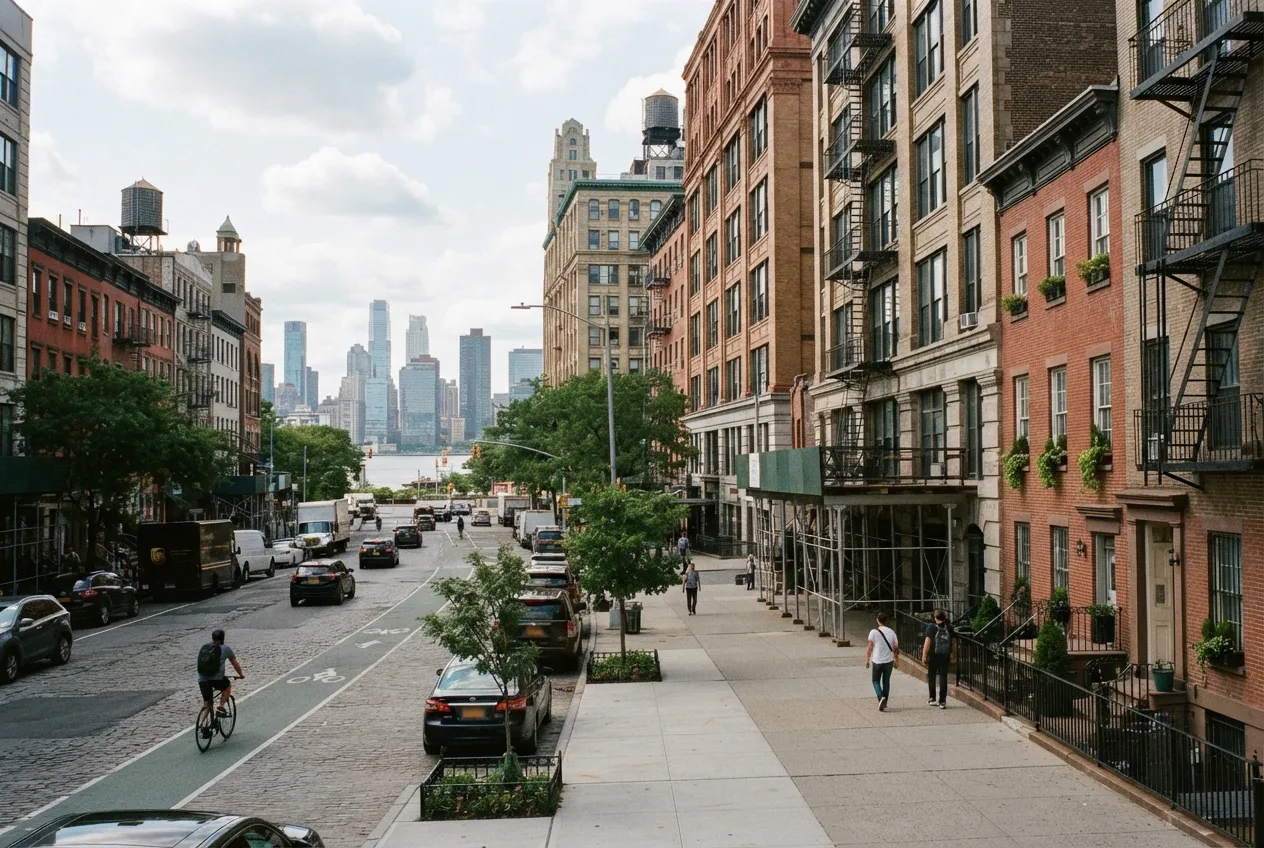
Housing in Hudson Square is mostly older: pre-war apartment and loft buildings, converted commercial structures, and some rowhouses. Many of these chimneys are tall masonry flues that have been in service for generations. Mortar wears down, clay tile liners crack, and debris collects at the base or at offsets. Animals can nest at the top. None of this is easy to spot without looking inside the flue.
A chimney that looks fine from the outside can still have gaps that let heat, smoke or carbon monoxide reach parts of the building it shouldn't. In buildings where several units share walls and sometimes chimney chases, a problem in one flue can affect more than one household. A yearly inspection is how you find these issues while they are still small.
Which Inspection Level Do You Need?
Chimney professionals use three levels of inspection. The right one depends on what has changed with your chimney and your home, not on how old the building is.
- Level 1: For chimneys where nothing has changed since the last inspection. The technician checks the accessible parts of the chimney, the appliance connection and the flue for soundness, blockages and buildup.
- Level 2: Needed when the system changes, such as a new appliance or a switch of fuel, or when the home is sold. It includes everything in Level 1 plus a closer look at the flue, usually with a camera, and at accessible areas such as attics and basements.
- Level 3: Used when a hidden hazard is suspected and the only way to reach it is to open part of the chimney or building. This is not routine, and we explain why before any work of this kind is recommended.
Oil-to-Gas Conversions and Chimney Liners
Many Manhattan buildings have moved their boilers from oil to gas. When a New York City building converts its boiler this way, the chimney has to be evaluated as part of the work. Gas exhaust produces acidic condensate, and over time that moisture can corrode a masonry flue that was never designed for it. A new liner is often needed.
If your building has converted, or is planning to, a Level 2 inspection shows whether the existing flue is suitable or whether a liner should be installed. If the conversion happened some time ago and the chimney hasn't been looked at since, it is worth scheduling an inspection now.
What Our Technicians Check
Every inspection follows the same basic approach: look at the full path smoke and exhaust take, from the appliance to the top of the chimney, and report clearly on what we find.
- The chimney crown, cap and exterior masonry where accessible
- The flue liner for cracks, gaps, corrosion and missing sections
- Soot, creosote and debris buildup inside the flue
- Blockages from nests, fallen masonry or other material
- The firebox, damper and smoke chamber on fireplaces
- The connection between the boiler, furnace or stove and the chimney
- Clearances to nearby combustible materials where they can be seen
Timing Your Inspection Around Heat Season
New York City's heat season runs from October 1 through May 31, when building owners must keep apartments heated to the city's minimum temperatures. A chimney problem found in the middle of winter can mean pressure to get repairs done quickly while tenants still need heat. Scheduling your inspection in late summer or early fall gives you time to plan any repairs before the heating system is running every day.
Fireplace owners benefit from the same timing. Having the flue checked before the first fire of the season means you know it is clear and in sound condition before you use it.
Along with Hudson Square, we inspect chimneys in nearby SoHo, Little Italy, Tribeca, Civic Center and Greenwich Village.
More services in Hudson Square
- Chimney Sweep in Hudson SquareLocal service & repairs
- Chimney Repair in Hudson SquareLocal service & repairs
- Air Duct Cleaning in Hudson SquareLocal service & repairs
- Chimney Liner Installation in Hudson SquareLocal service & repairs