
The short answer
Hudson Square homes often need a new chimney liner when an old clay or unlined masonry flue is damaged, or when a boiler or furnace changes fuel, especially in oil-to-gas conversions. We inspect the flue first, then install a liner sized to the appliance or fireplace it serves.
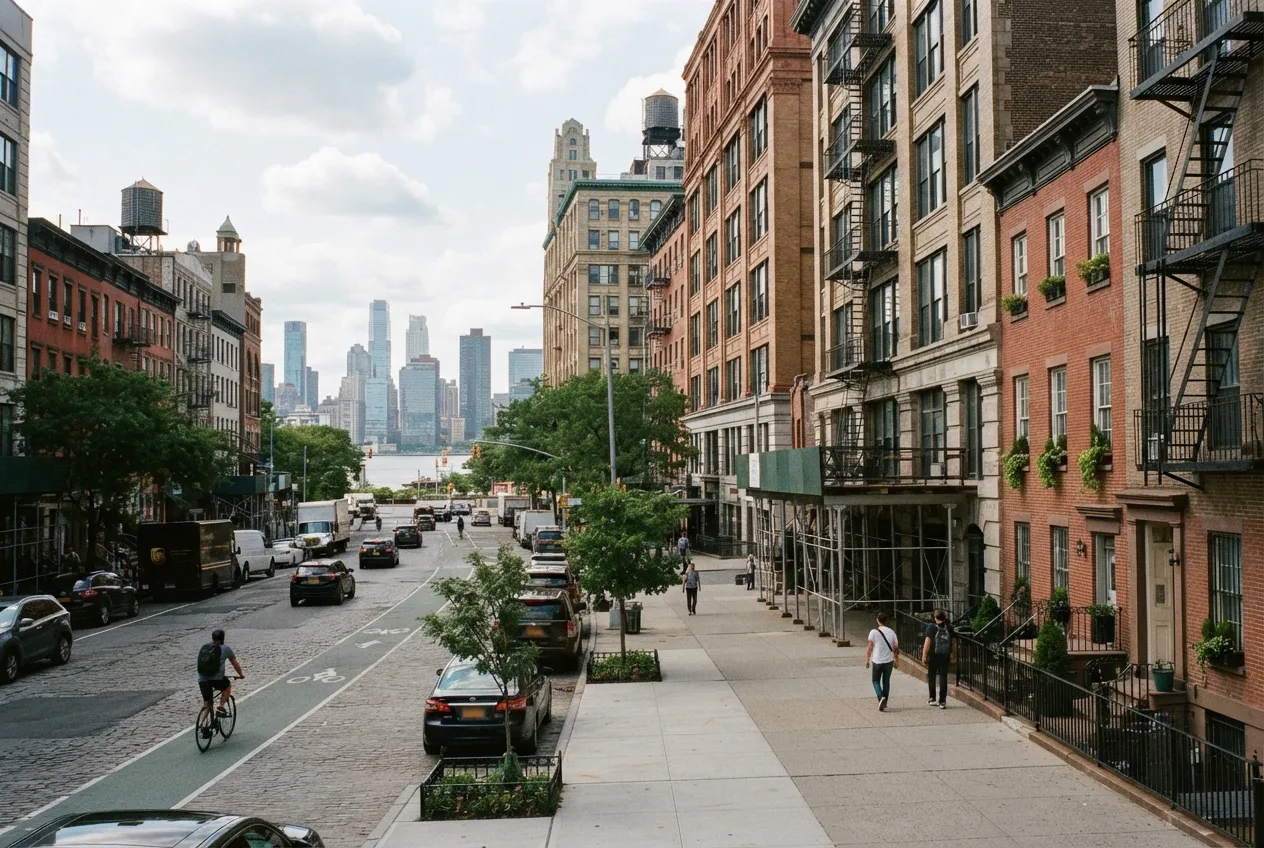
A chimney liner is the protective channel inside your flue. It carries smoke and exhaust out of the building and keeps heat, gases, and acidic condensate away from the surrounding masonry. In Hudson Square, many chimneys run through older brick buildings, including pre-war apartment buildings, converted loft buildings, and rowhouses. Some of those flues were built for coal or oil, were never lined, or have clay tiles that cracked long ago. Our office is here in the neighborhood, so our certified technicians can evaluate your flue, explain what is actually wrong, and install a liner sized for the appliance or fireplace it serves.
Why Liners Matter in Hudson Square Buildings
Masonry chimneys in older Manhattan buildings were often built with clay tile liners or with no liner at all. Decades of heat cycling, moisture, and settling can crack tiles, open mortar joints, and leave gaps where exhaust can reach wood framing or seep into neighboring spaces. In a building where walls are shared, a damaged flue can affect more than one home.
A properly installed liner restores a continuous, sealed path from the appliance or firebox to the top of the chimney. It also gives the flue the right size and shape for the equipment it serves. That matters for draft, because a flue that is too large or too small for the appliance can cause poor venting and heavy condensation.
Oil-to-Gas Conversions and Your Flue
Many Manhattan buildings have switched boilers from oil to gas. When a New York City building makes that conversion, the chimney has to be evaluated as part of the work. A new liner is often needed because gas exhaust produces acidic condensate that can corrode a masonry flue from the inside.
If your building is planning a conversion, or has already converted and the chimney was never addressed, we can inspect the flue and recommend a liner that suits the new appliance. We can also coordinate timing with the heating contractor so the chimney work fits into the overall project.
Signs Your Chimney May Need a New Liner
Some liner problems can only be found with a camera inspection. Others show up in ways you can notice yourself. Call us to take a look if you see any of the following:
- Pieces of clay tile or crumbling mortar falling into the firebox or cleanout
- Exhaust odors, smoke spillage, or poor draft when the appliance or fireplace runs
- White staining, dampness, or peeling paint on walls near the chimney
- Rust or corrosion at the base of the flue or around the appliance connector
- A recent or planned change of fuel or heating equipment
- A chimney fire in the past, even a small one
How Liner Installation Works
The NFPA 211 standard calls for chimneys, fireplaces, and vents to be inspected once a year, and it describes three inspection levels. A change to the system, such as a new appliance or a switch of fuel, calls for a Level 2 inspection. That inspection includes a camera look inside the flue. If a hidden hazard has to be reached by opening part of the chimney or building, a Level 3 inspection may be needed.
Once we know the condition of the flue, a typical installation follows these steps:
- Confirm the appliance or fireplace type and size the liner to match it
- Clean the flue and remove loose debris or broken tile
- Install the liner, most often stainless steel for appliance flues, with insulation where it is called for
- Connect the liner at the bottom and fit a proper cap and top seal
- Run a final camera check and review the results with you
Scheduling Around Heat Season
New York City's heat season runs from October 1 through May 31. During that period, building owners must keep apartments heated to the city's minimum temperatures. If your chimney serves a building boiler, it is usually easiest to plan liner work before October. Then the system is ready when heat is required.
When work has to happen during heat season, we plan the installation to keep heating downtime as short as possible. We also talk with owners and building managers about access to the roof, the boiler room, and any shared spaces before work begins.
Serving Hudson Square and Nearby Neighborhoods
We work throughout Hudson Square and the 10012 ZIP code. We also serve nearby SoHo, Little Italy, Tribeca, Civic Center, and Greenwich Village. Whether you own a rowhouse with a working fireplace or manage a pre-war apartment building with a gas boiler, we start with an honest inspection and explain your options before any liner goes in.
More services in Hudson Square
- Chimney Sweep in Hudson SquareLocal service & repairs
- Chimney Inspection in Hudson SquareLocal service & repairs
- Chimney Repair in Hudson SquareLocal service & repairs
- Air Duct Cleaning in Hudson SquareLocal service & repairs