
The short answer
Lower East Side chimneys should be inspected once a year, as the NFPA 211 standard recommends, and again whenever you change appliances or fuel or sell the property. Our certified technicians pick the right inspection level, check the flue from top to bottom, and explain what they find in plain terms.
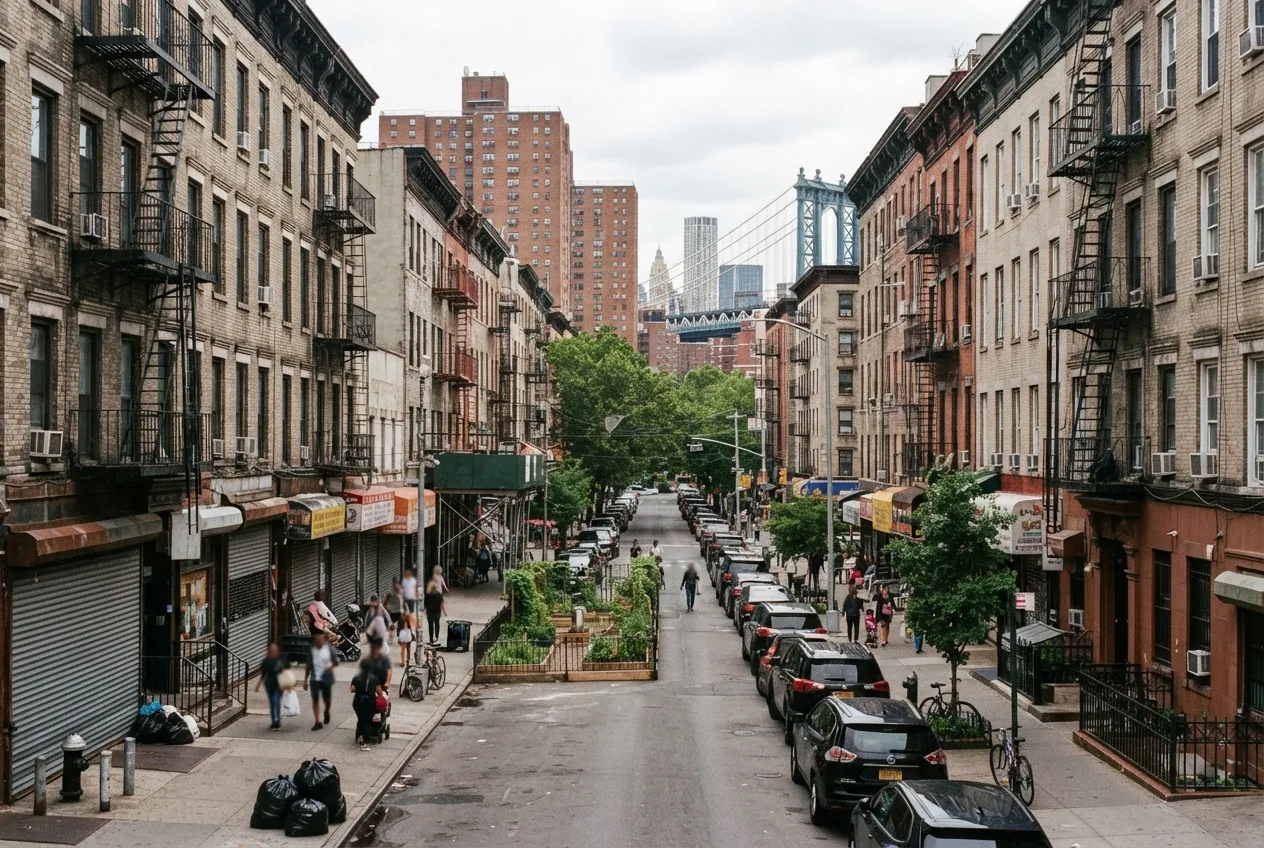
The Lower East Side has pre-war walk-ups, older rowhouses, and mid-rise apartment buildings. Many still vent a fireplace, boiler, or water heater through a masonry chimney. In older buildings, a chimney can hide cracked flue tiles, loose mortar, gaps between liner sections, or debris that blocks the flue. You can't see any of this from the living room or the boiler room. A chimney inspection shows you what is happening inside the flue before it becomes a smoke, draft, or carbon monoxide problem. Our Manhattan office is about a mile from the neighborhood, so our certified technicians can reach homes in ZIP code 10002 without a long trip across town.
Why Yearly Inspections Matter in Lower East Side Buildings
The NFPA 211 standard calls for chimneys, fireplaces, and vents to be inspected once a year. That advice carries extra weight in older masonry buildings. Decades of heating cycles, moisture, and settling wear down mortar joints and clay flue liners. Damage usually starts small, such as a hairline crack or a missing piece of tile, and it gets worse each season the chimney is used.
Timing matters in New York City because the heat season runs from October 1 through May 31. During those months, building owners must keep apartments heated to the city's minimum temperatures, so boilers and their chimneys work hard for most of the year. An inspection before October lets you fix problems while the heat can still be off.
Choosing the Right Inspection Level
Chimney professionals use three inspection levels. We match the level to your situation instead of defaulting to the most involved option.
- Level 1: For chimneys that are used the same way as before and haven't had any changes. We check the accessible parts of the chimney, the flue, and the connection to the appliance.
- Level 2: For changes to the system, such as a new boiler, water heater, or fireplace insert, a switch to a different fuel, or the sale of the home. This level usually includes a camera inspection of the full flue.
- Level 3: For a suspected hidden hazard that can only be reached by opening part of the chimney or the building, such as a wall or chase. We recommend this only when earlier findings point to a concealed problem.
Oil-to-Gas Conversions and Chimney Liners
Many older Manhattan buildings have switched, or plan to switch, from oil to gas heat. When a New York City building converts its boiler from oil to gas, the chimney has to be evaluated as part of the work. Gas exhaust produces acidic condensate, and that moisture can corrode an unlined or poorly lined masonry flue over time. Because of this, a new liner is often needed.
If your building is planning a conversion, an inspection early in the process shows the condition of the existing flue. It also tells you whether a liner is likely to be part of the project, so you aren't surprised partway through. If your building converted in the past and you see staining, crumbling mortar, or debris at the base of the chimney, an inspection can show whether condensate is damaging the masonry.
What Our Technicians Check
Every inspection covers the parts of the chimney that affect safety and how well it vents. When we're done, we walk you through what we found and show you photos or camera footage when it helps explain a problem.
- Flue liner condition, including cracks, gaps, and spalling tile
- Blockages from soot, creosote, debris, or animal nests
- The connector pipe and how the appliance ties into the chimney
- Mortar joints, the crown, and the chimney cap
- Signs of water entry, such as staining or efflorescence
- Clearances to nearby combustible materials where they can be seen
- Draft problems that could push exhaust back into living spaces
Serving the Lower East Side and Nearby Neighborhoods
We inspect chimneys in rowhouses, walk-up apartment buildings, and mixed-use properties throughout ZIP code 10002. Owners, co-op boards, and property managers can schedule an inspection for a single fireplace or for a building's boiler chimney.
We also serve the surrounding neighborhoods, including Chinatown, Two Bridges, the East Village, SoHo, and Little Italy. If you manage properties in more than one of these areas, we can coordinate inspections so you get consistent reports across buildings.
More services in Lower East Side
- Chimney Sweep in Lower East SideLocal service & repairs
- Chimney Repair in Lower East SideLocal service & repairs
- Air Duct Cleaning in Lower East SideLocal service & repairs
- Chimney Liner Installation in Lower East SideLocal service & repairs