
The short answer
An East Village chimney should be inspected once a year, as the NFPA 211 standard calls for, and again whenever you change appliances or fuel or sell the home. Apex Premier Chimney Services inspects chimneys in rowhouses, brownstones and pre-war buildings in ZIP codes 10003 and 10009. You get a clear account of the chimney's condition and the inspection level it needs.
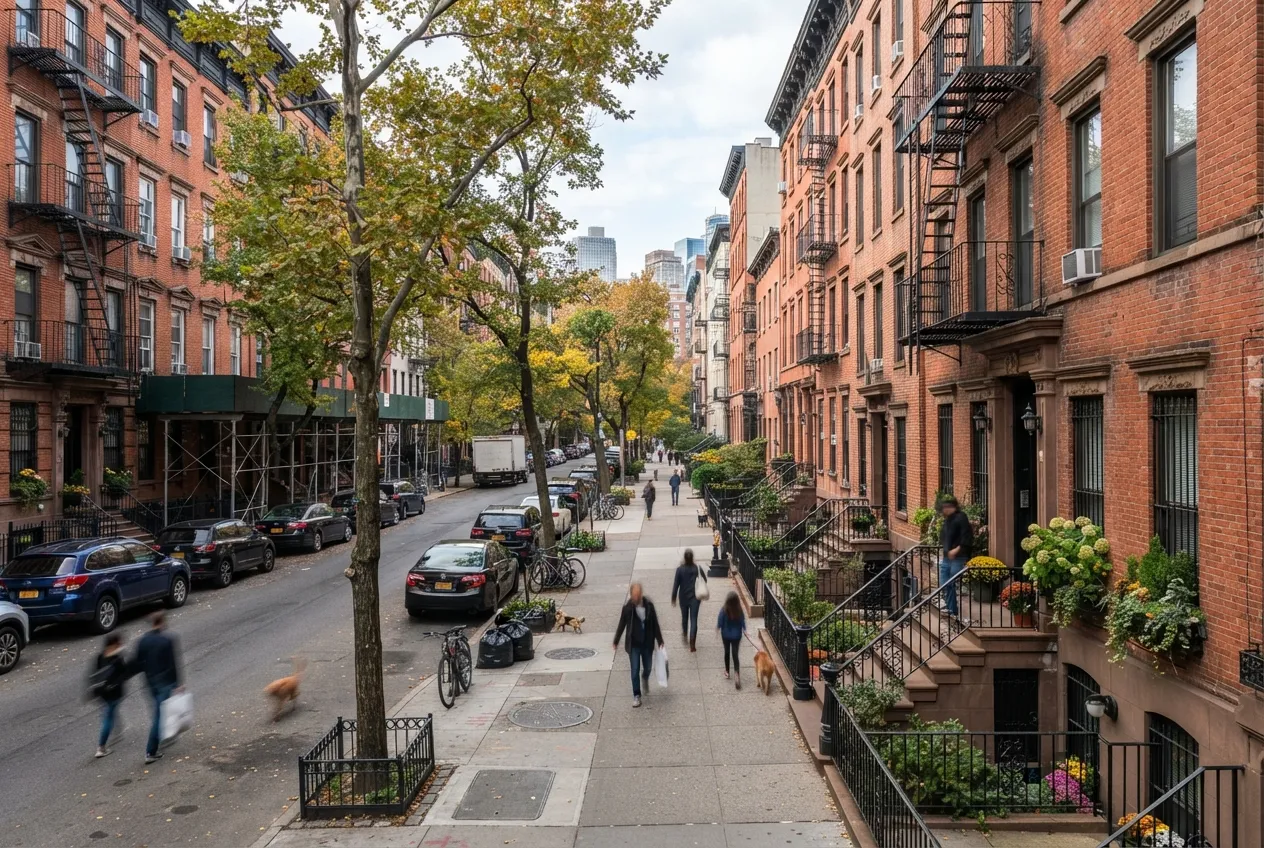
Many East Village homes are rowhouses, brownstones, walk-ups and pre-war apartment buildings with masonry chimneys. Some serve wood-burning or decorative fireplaces. Others vent a building's boiler or furnace. In either case, a chimney you rarely see can hide cracked flue tiles, loose mortar, blockages or a liner that no longer suits the appliance it serves. Apex Premier Chimney Services provides chimney inspections throughout East Village, including ZIP codes 10003 and 10009, about a mile east of our Manhattan office. Our certified technicians look at the whole system and explain what they find in plain terms, so you can decide what, if anything, needs to happen next.
What a Chimney Inspection Covers
An inspection is a structured look at the parts of the chimney that keep smoke and exhaust moving up and out of your home. It is different from a sweep, which removes soot and creosote. A cleaning may follow if the inspection shows buildup, but the main goal is to understand the chimney's condition.
For a typical East Village fireplace or appliance flue, our technicians check:
- The firebox, damper and smoke chamber for cracks, gaps and missing mortar
- Flue tiles or the existing liner for breaks, spalling, corrosion or deposits
- Blockages such as debris or nesting material
- The connection between a boiler, furnace or stove and the chimney
- The chimney's exterior, crown and cap where they can be reached safely
- Signs of water entry, such as staining or efflorescence on nearby walls and ceilings
Choosing the Right Inspection Level
The NFPA 211 standard calls for chimneys, fireplaces and vents to be inspected once a year. Chimney professionals use three levels of inspection, and the right one depends on what has changed in your home.
A Level 1 inspection fits when nothing has changed and you have used the chimney as before. A Level 2 inspection applies when the system changes, for example when you install a new appliance or switch fuels, and when the home is being sold. Level 2 usually includes a closer look at the flue interior with a camera. A Level 3 inspection is reserved for cases where a hidden hazard has to be reached by opening part of the chimney or the building. It is not routine. We recommend it only when earlier findings point to a concealed problem.
Older Masonry and Boiler Flues in East Village Buildings
Many pre-war buildings and rowhouses in the neighborhood have masonry flues that were built for a different fuel or appliance than the one in use today. Settling, freeze-thaw cycles and decades of heat can open mortar joints and crack flue tiles. That damage is often invisible from the living space.
Boiler conversions deserve special attention. When a New York City building converts its boiler from oil to gas, the chimney has to be evaluated as part of the work. A new liner is often needed because gas exhaust produces acidic condensate that can corrode a masonry flue. If your building is planning a conversion, or has already finished one without a chimney evaluation, an inspection can show whether the existing flue is a good match for the new equipment.
Timing Your Inspection Around Heat Season
New York City's heat season runs from October 1 through May 31. During that time, building owners must keep apartments heated to the city's minimum temperatures. For owners of buildings with a central boiler, a chimney problem found in midwinter can be hard to fix quickly.
Scheduling the inspection in late spring or summer gives you time to plan any repairs, relining or cleaning before the heating system is needed again. Homeowners with fireplaces benefit from the same timing, since the chimney is cool and the work can be done without interrupting fall and winter use.
What to Expect on Inspection Day
Our technician will ask how the chimney is used, what appliances connect to it, and whether anything has changed recently. They will protect the area around the fireplace or appliance before starting. For apartment and co-op buildings, it helps to arrange roof or boiler-room access with your super or building management ahead of time.
After the inspection, we walk you through the findings and explain which items need attention now, which can be monitored, and which are fine as they are. Where photos or camera footage are taken, we use them to show you the conditions we describe. We also serve nearby Lower East Side, Gramercy, Greenwich Village, SoHo and Little Italy.
More services in East Village
- Chimney Sweep in East VillageLocal service & repairs
- Chimney Repair in East VillageLocal service & repairs
- Air Duct Cleaning in East VillageLocal service & repairs
- Chimney Liner Installation in East VillageLocal service & repairs