
The short answer
East Village chimneys should be swept when soot or creosote builds up and inspected once a year, following the NFPA 211 standard. Apex Premier Chimney Services sends certified technicians to homes and buildings in 10003 and 10009 for sweeping, inspection, and evaluation of boiler chimneys after an oil-to-gas conversion.
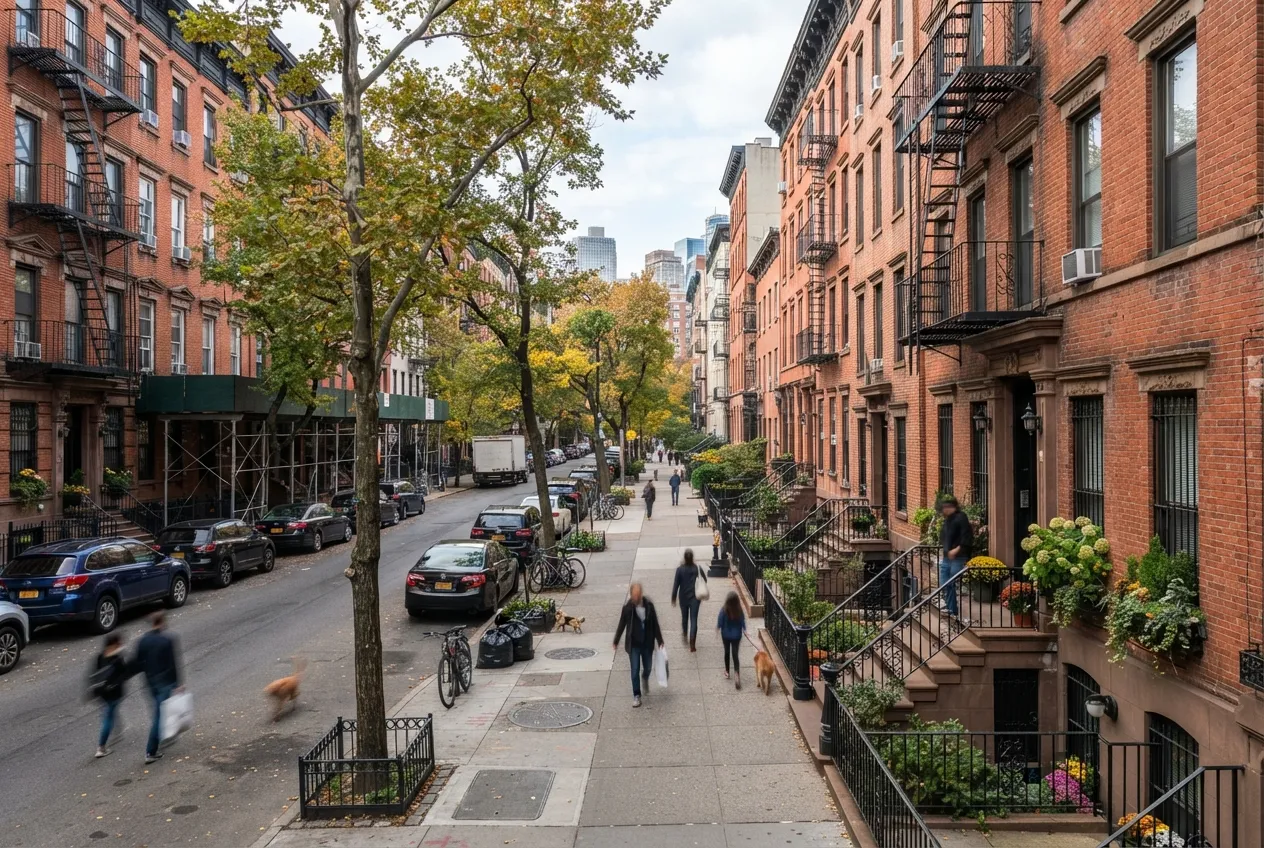
East Village homes come in many forms: brownstones and rowhouses with original fireplaces, pre-war walk-ups where a flue may be shared or sealed, and larger apartment buildings with a boiler chimney. Apex Premier Chimney Services is based about a mile west of the neighborhood, so our certified technicians reach addresses in the 10003 and 10009 ZIP codes quickly. We clean wood-burning fireplaces, inspect flues that have sat unused for years, and check boiler chimneys before and after fuel changes. This page covers what a chimney sweep visit involves in this part of Manhattan and when to schedule one.
Why East Village Chimneys Need Regular Sweeping
Most chimneys here are masonry and were built long before modern liners. Over time, mortar joints wear down, clay flue tiles crack, and soot and creosote build up on the inside walls. Creosote is the tar-like residue that wood smoke leaves behind. It burns easily, and a thick layer can catch fire inside the flue.
Chimneys that go unused for long periods have their own problems. Birds, nesting material, and fallen debris can block the flue, so smoke and carbon monoxide have nowhere to go when someone finally lights a fire. A sweep removes the buildup, and a camera check shows what is happening inside the flue.
What Happens During a Chimney Sweep Visit
We protect the room first, since many East Village fireplaces sit in finished parlors or small apartment living rooms. The technician lays down drop cloths, seals the fireplace opening, and runs a vacuum to keep soot out of the room.
A standard visit includes:
- Brushing the flue, smoke chamber, and smoke shelf to remove soot and creosote
- Cleaning the firebox and checking the damper so it opens and closes properly
- Looking for blockages such as nests, leaves, or fallen masonry
- Checking the visible flue liner and crown for cracks and gaps
- Photos or video of anything that needs follow-up, explained in plain terms
Inspection Levels and the NFPA 211 Standard
The NFPA 211 standard calls for chimneys, fireplaces, and vents to be inspected once a year. Pairing that inspection with a sweep makes sense for most households that burn wood regularly.
Chimney professionals use three inspection levels. A Level 1 inspection fits when nothing about the system has changed. A Level 2 inspection is called for when the system changes, such as a new appliance or a switch of fuel, or when the home is sold. That matters in a neighborhood where brownstones and co-op units change hands often. A Level 3 inspection is needed only when a hidden hazard has to be reached by opening part of the chimney or the building. We tell you which level fits your situation before any work starts.
Boiler Chimneys and Oil-to-Gas Conversions
Many pre-war apartment buildings in the East Village once heated with oil, and some are converting their boilers to gas. When a New York City building makes that change, the chimney has to be evaluated as part of the work. A new liner is often needed, because gas exhaust produces acidic condensate that can corrode an older masonry flue.
We sweep and inspect boiler chimneys for building owners and managers, document their condition, and point out where a liner or repair may be needed so the conversion can move forward.
Timing Your Sweep Around Heat Season
New York City's heat season runs from October 1 through May 31. During those months, building owners must keep apartments heated to the city's minimum temperatures. For buildings with a boiler chimney, late summer and early fall are the best times for sweeping and inspection, so repairs can be finished before the heat has to stay on.
Homeowners who use a fireplace also do well to book before the first cold snap. Schedules fill up in fall, and a problem found in September is easier to fix than one found in December. We also serve nearby neighborhoods, including the Lower East Side, Gramercy, Greenwich Village, SoHo, and Little Italy.
More services in East Village
- Chimney Inspection in East VillageLocal service & repairs
- Chimney Repair in East VillageLocal service & repairs
- Air Duct Cleaning in East VillageLocal service & repairs
- Chimney Liner Installation in East VillageLocal service & repairs