
The short answer
A chimney inspection in Two Bridges checks the flue, liner, masonry, and connections so you know whether the system is safe to use. The NFPA 211 standard calls for a yearly inspection, and a more detailed Level 2 inspection is appropriate when you change appliances, switch fuels, or sell the property.
Many homes and buildings in Two Bridges still rely on masonry chimneys. Some serve a fireplace, but more often they vent a boiler or water heater that has been running for decades. Apex Premier Chimney Services inspects chimneys and flues in Two Bridges from our Manhattan office, about a mile to the north. Whether you own a pre-war apartment building, manage a walk-up, or simply want to know if an old fireplace is safe to use, an inspection tells you the real condition of the flue before a problem shows up as smoke, odor, or a failed heating system.
What we look at in Two Bridges chimneys
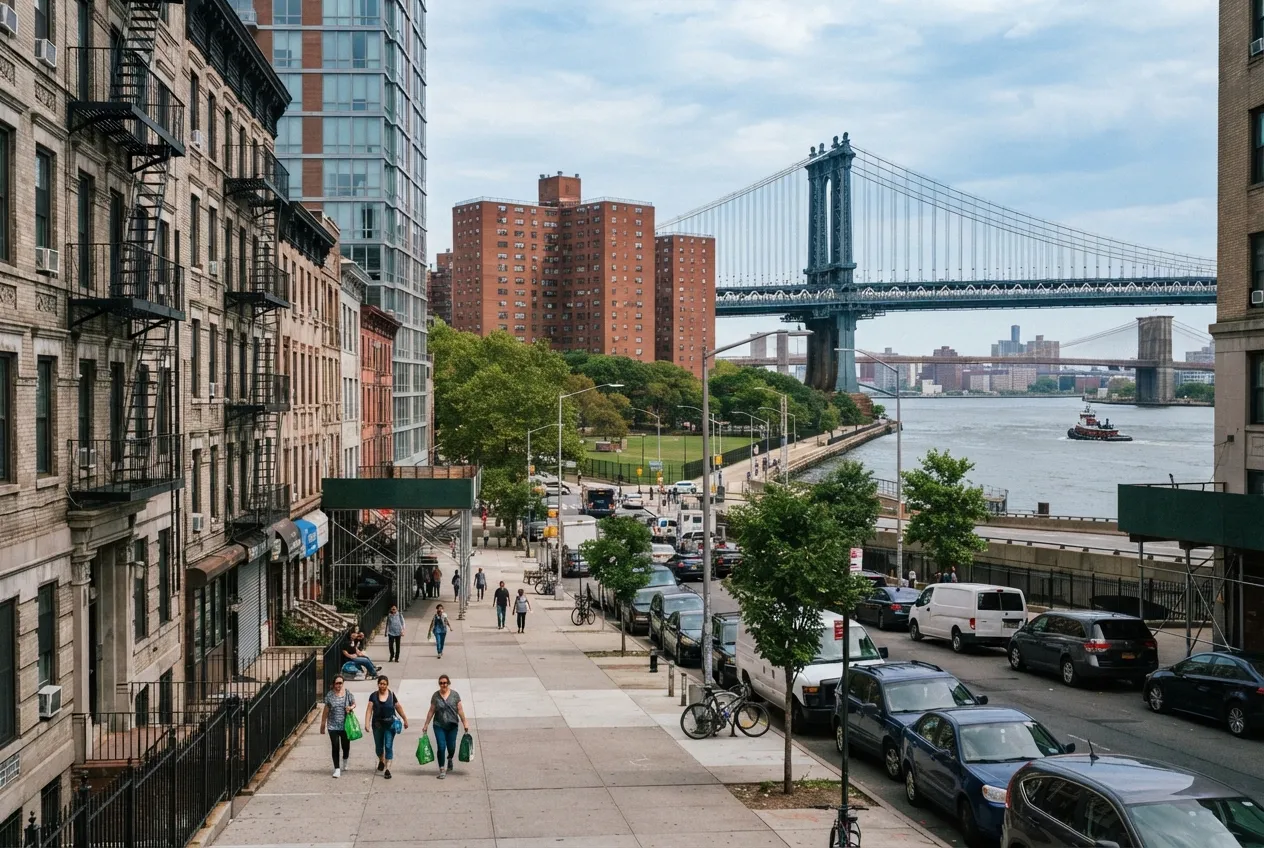
Housing in Two Bridges leans toward older masonry: pre-war apartment buildings, tenement-style walk-ups, and mixed-use buildings with shops below and apartments above, along with newer mid-rise and high-rise buildings. Older buildings often have tall, narrow flues shared by heating equipment, and those flues take years of heat, moisture, and city weather. Our certified technicians start with the parts of the system you can reach and work toward the parts you can't.
A standard inspection typically covers:
- The flue interior, checked for soot and creosote buildup, blockages, and debris
- The liner, checked for cracks, gaps, missing sections, or corrosion
- The connector pipe from the boiler or water heater, including the joints and the thimble where it enters the chimney
- The cleanout door and the base of the flue, where debris and fallen masonry tend to collect
- Exterior brick, mortar joints, crown, and cap, where the roof is accessible
- Fireplace components such as the damper, firebox, and smoke chamber
Which inspection level do you need?
Under the NFPA 211 standard, chimneys, fireplaces, and vents should be inspected once a year. Chimney professionals use three inspection levels, and the right one depends on what has changed since the last inspection.
A Level 1 inspection fits when nothing about the system has changed and you are keeping up with yearly maintenance. A Level 2 inspection is called for when the system changes, for example when a new boiler is installed or the building switches fuel, and also when a property is sold. It usually includes a camera inspection of the flue's full length. A Level 3 inspection is reserved for situations where a hidden hazard has to be reached by opening part of the chimney or the building. We only recommend it when the earlier levels point to a problem that can't be seen any other way.
Oil-to-gas conversions and liners
Many older Manhattan buildings have moved, or are planning to move, from oil heat to gas. When a New York City building converts its boiler from oil to gas, the chimney has to be evaluated as part of that work. A new liner is often needed, because gas exhaust produces acidic condensate that can corrode an unlined or poorly lined masonry flue over time.
If your Two Bridges building is planning a conversion, an inspection early in the project shows the current condition of the flue and whether a liner is likely to be part of the job. Learning that during planning is far easier than discovering it after the new boiler is already installed.
Timing inspections around the heat season
New York City's heat season runs from October 1 through May 31. During that period, building owners must keep apartments heated to the city's minimum temperatures. If a chimney problem forces a boiler shutdown in January, tenants feel it right away.
For that reason, we suggest that building owners and managers schedule inspections in late spring or summer. That leaves time to handle any cleaning, liner work, or masonry repairs before the heating system has to run every day. Homeowners with wood-burning fireplaces benefit from the same timing, since problems found in the off-season can be fixed before the first fire of the year.
Serving Two Bridges and nearby neighborhoods
Because our office is close by in Manhattan, Two Bridges is a short trip for our crews. We also inspect chimneys in Chinatown, the Lower East Side, Tribeca, Civic Center, and SoHo, where much of the housing stock is similar: older masonry buildings with flues that have served several generations of heating equipment.
After the inspection, we walk you through what we found, show you photos or camera footage where available, and explain which items are routine maintenance and which need attention sooner. Then you can decide on next steps with a clear picture of your chimney's condition.
More services in Two Bridges
- Chimney Sweep in Two BridgesLocal service & repairs
- Chimney Repair in Two BridgesLocal service & repairs
- Air Duct Cleaning in Two BridgesLocal service & repairs
- Chimney Liner Installation in Two BridgesLocal service & repairs