
The short answer
Chimney repair in Two Bridges usually means fixing weathered brick and mortar, cracked crowns, failed flashing, or damaged flue liners on older masonry buildings. Apex Premier Chimney Services inspects the chimney first, explains what needs attention, and schedules repairs to avoid disrupting the heating season where possible.
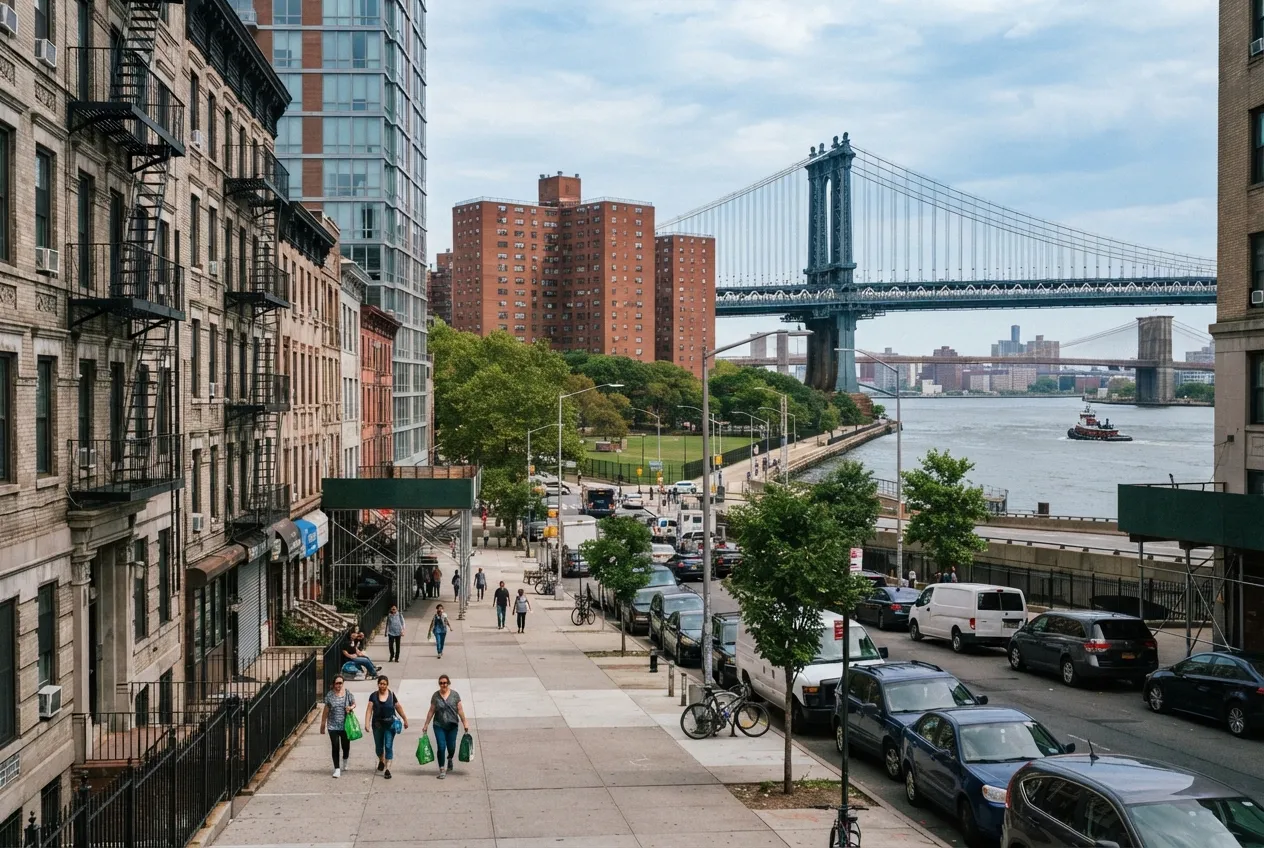
Two Bridges sits at the lower edge of Manhattan, about a mile south of our Manhattan office. Most of its homes are in older masonry buildings: tenement-style walk-ups, pre-war apartment buildings, and some rowhouses alongside larger postwar buildings. Chimneys on these structures have absorbed decades of wind off the East River, freeze-thaw cycles, and long heating seasons. Apex Premier Chimney Services repairs the masonry, flues, crowns, caps, and flashing that carry smoke and exhaust safely out of the building. Our certified technicians show you what they find and explain your options before any work begins.
Common Chimney Problems in Two Bridges Buildings
Older masonry chimneys in this part of Manhattan tend to fail in predictable places. Water is usually the root cause. Rain and snow get into porous brick and open mortar joints, freeze, expand, and slowly break the masonry apart. On taller buildings, the chimney stack is exposed on every side, so damage often shows up at the top first.
Inside the chimney, flue tiles can crack from age, heat, or settling. Once that happens, exhaust and moisture can reach the surrounding brick and nearby framing. Here are the repairs we handle most often:
- Spalling, cracked, or loose bricks on the chimney stack
- Eroded mortar joints that need repointing
- Cracked or crumbling chimney crowns
- Missing, rusted, or damaged chimney caps
- Leaking flashing where the chimney meets the roof
- Cracked, gapped, or collapsed clay flue tiles
- Corroded or deteriorated flue liners
Oil-to-Gas Conversions and Liner Repair
Many buildings in and around Two Bridges were originally heated with oil. When a New York City building converts its boiler from oil to gas, the chimney has to be evaluated as part of the work. A new liner is often needed. Gas exhaust produces acidic condensate that can corrode a masonry flue that handled oil exhaust without trouble for years.
If your building has already converted and you see stained brick, damp patches on interior walls near the chimney, or debris collecting at the base of the flue, the liner may be breaking down. We can assess the flue and tell you whether it needs a liner repair, a relining, or other masonry work to vent safely.
How We Approach a Chimney Repair
Every repair starts with an inspection. The NFPA 211 standard calls for chimneys, fireplaces, and vents to be inspected once a year. Professionals use three levels. A Level 1 inspection fits when nothing about the system has changed. A Level 2 inspection applies when the system changes, such as a new appliance or a switch in fuel, or when the home is sold. A Level 3 inspection is used when a suspected hidden hazard can only be reached by opening part of the chimney or building.
After the inspection, we walk you through the findings in plain terms. Then we:
- Document the damage with photos so you can see it yourself
- Separate urgent safety problems from items that can be planned for later
- Describe the repair method and the materials we would use
- Coordinate roof access and scheduling with building management when needed
- Clean up the work area and review the finished repair with you
Timing Repairs Around Heat Season
New York City's heat season runs from October 1 through May 31. During those months, building owners must keep apartments heated to the city's minimum temperatures. A chimney that serves a boiler can't simply be taken out of service mid-winter without a plan.
For that reason, late spring and summer are often the best time for major repairs such as relining or rebuilding a chimney top. If an inspection turns up a safety problem during the heating months, we'll talk through your options so the building stays both safe and heated.
Serving Two Bridges and Nearby Neighborhoods
Our crews work throughout lower Manhattan. Besides Two Bridges, we serve Chinatown, the Lower East Side, Tribeca, Civic Center, and SoHo. The building types in these neighborhoods are similar: older masonry, shared walls, tight roof access, and chimneys that often serve more than one unit. We plan each repair around those conditions, whether you own a rowhouse, manage a walk-up, or live in a pre-war apartment building.
More services in Two Bridges
- Chimney Sweep in Two BridgesLocal service & repairs
- Chimney Inspection in Two BridgesLocal service & repairs
- Air Duct Cleaning in Two BridgesLocal service & repairs
- Chimney Liner Installation in Two BridgesLocal service & repairs