
The short answer
A chimney liner is the protective channel inside a flue that keeps heat, smoke and acidic exhaust away from masonry and framing. Greenwich Village homes often need a new liner when an old clay liner fails, when a fireplace is brought back into use, or when a boiler converts from oil to gas.
Many Greenwich Village homes still vent fireplaces, boilers and water heaters through old masonry flues. Some were built with clay tile liners that have cracked or shifted over the decades. Some were never lined at all. A chimney liner is the protective channel inside the chimney that carries smoke and exhaust safely out of the building and keeps heat and corrosive byproducts away from the surrounding brick and framing. Apex Premier Chimney Services installs liners in brownstones, rowhouses and pre-war apartment buildings throughout the neighborhood. Our office is about a mile southwest of Greenwich Village, so scheduling an evaluation is simple.
Why Older Village Chimneys Often Need New Liners
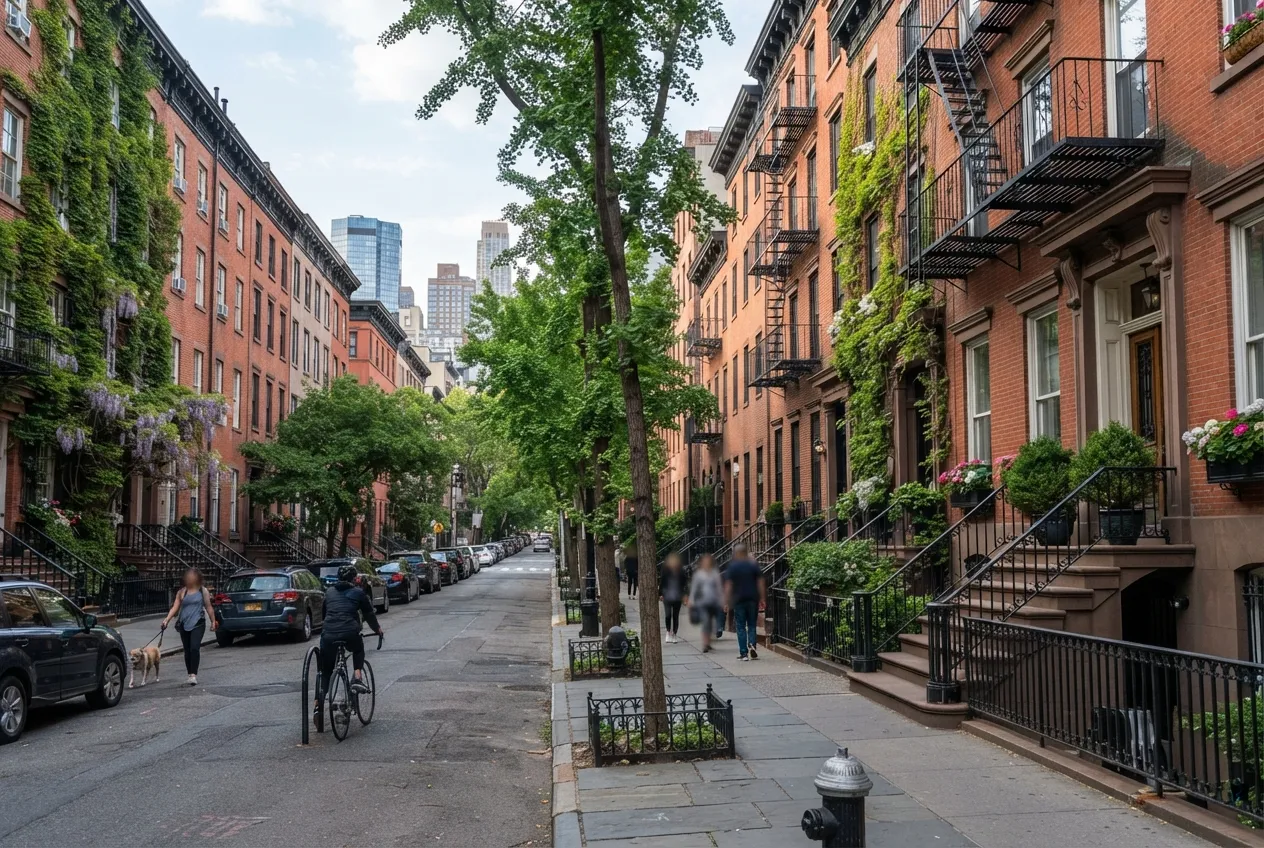
Brownstones and rowhouses in Greenwich Village commonly have chimneys that share walls with neighbors and run through several floors of living space. When the liner inside that chimney is cracked, missing or deteriorated, heat and combustion gases can reach brick, mortar and nearby wood. Carbon monoxide can also leak into rooms instead of venting outside.
In pre-war apartment buildings, a single flue may serve a boiler or several appliances. Years of heating seasons wear on the masonry. The interior of the flue often shows the damage before the outside of the chimney does.
- Cracked, spalling or missing clay tile sections
- Mortar joints eroded inside the flue
- Flaking masonry or debris collecting at the base of the chimney
- Staining or dampness on interior walls next to the chimney
- A flue sized for an old appliance that does not suit a new one
Oil-to-Gas Conversions in Greenwich Village Buildings
When a New York City building converts its boiler from oil to gas, the chimney has to be evaluated as part of the work. Gas exhaust produces acidic condensate, which can corrode a masonry flue over time. For that reason, a new liner is often needed.
If your building is planning a conversion, we can inspect the chimney early and tell you what kind of liner the new equipment calls for. Then the liner work can be coordinated with the heating contractor's schedule rather than holding up the project.
How We Evaluate a Chimney Before Lining It
The NFPA 211 standard calls for chimneys, fireplaces and vents to be inspected once a year. It describes three inspection levels. A change to the system, such as a new appliance or a switch of fuel, calls for a Level 2 inspection, and so does the sale of a home. That usually includes a camera inspection of the full length of the flue. A Level 3 inspection is used when a hidden hazard can only be reached by opening part of the chimney or building.
Our certified technicians look at the condition of the existing liner, the size and shape of the flue, any offsets in the chimney's path, and the appliance it will serve. That information determines which liner fits the job.
Liner Options We Install
Different chimneys and appliances need different liners. We explain the options that suit your flue and why we recommend one over another.
- Stainless steel liners, rigid or flexible, often used for gas and oil appliances and for chimneys with bends
- Liners sized to match a new boiler or water heater after a conversion
- Insulated liner systems that help exhaust draft properly and protect nearby framing
- Lining for fireplaces being brought back into use after years of disuse
Planning Around Heat Season and Building Logistics
New York City's heat season runs from October 1 through May 31. During those months, building owners must keep apartments heated to the city's minimum temperatures. If the boiler flue needs a liner, it helps to schedule the evaluation well before October. That way the system is ready when tenants depend on it.
Work in the Village often means narrow stairways, shared roofs and close neighbors. We plan roof access, protect interior finishes near the fireplace or boiler room, and keep the work area as contained as possible. We also serve nearby SoHo, Little Italy, Hudson Square, the West Village and Gramercy.
More services in Greenwich Village
- Chimney Sweep in Greenwich VillageLocal service & repairs
- Chimney Inspection in Greenwich VillageLocal service & repairs
- Chimney Repair in Greenwich VillageLocal service & repairs
- Air Duct Cleaning in Greenwich VillageLocal service & repairs