
The short answer
A chimney sweep removes creosote, soot and blockages from your flue so smoke and gases can vent safely. Greenwich Village homes with older masonry chimneys should be swept and inspected at least once a year, as the NFPA 211 standard recommends, ideally before you start using the fireplace in the fall.
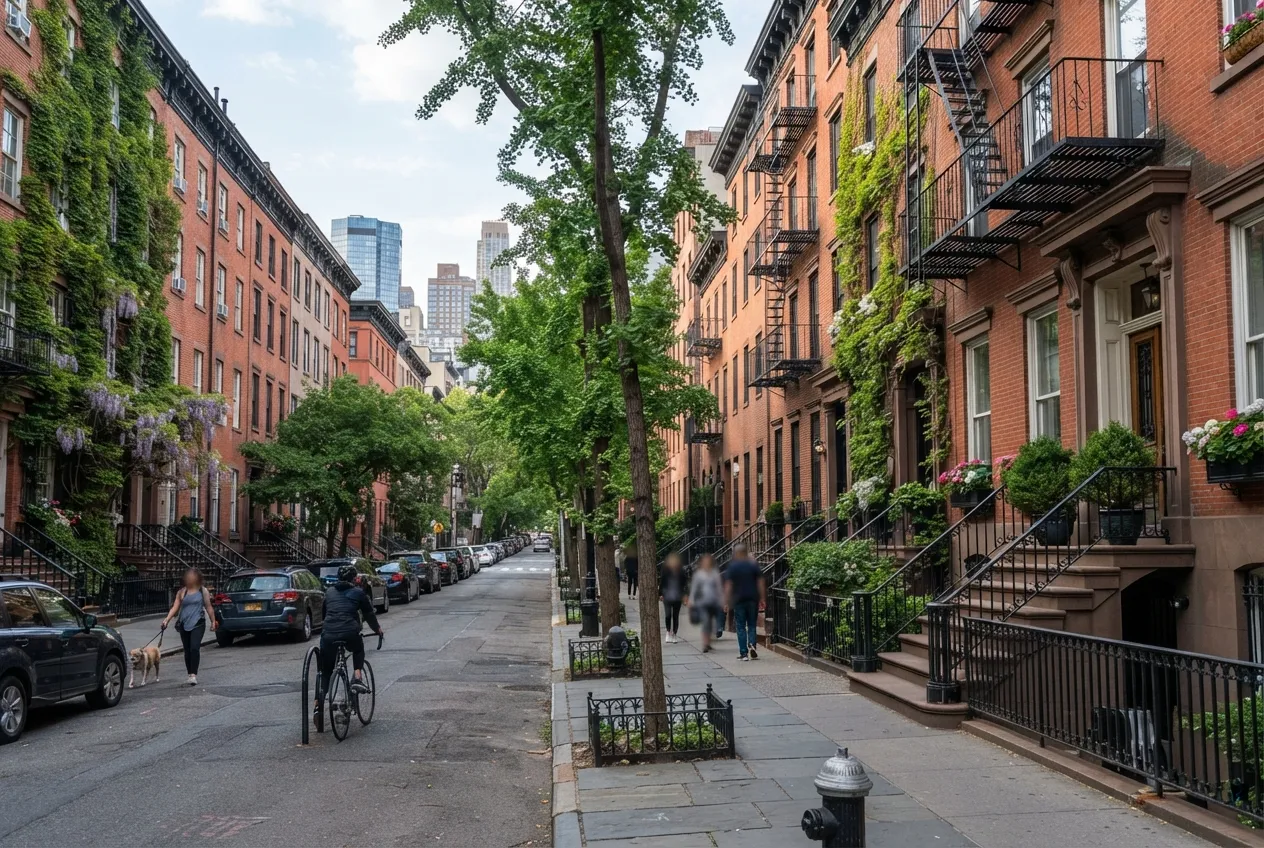
Many Greenwich Village homes still have working fireplaces. Brownstones, townhouses and pre-war walk-ups often kept their original masonry chimneys, and some heat with wood, some burn gas logs, and some use flues that vent boilers or water heaters. Apex Premier Chimney Services is about a mile southwest of the neighborhood, so our certified technicians can reach most Village homes quickly. A chimney sweep clears the soot, creosote and debris that build up in a flue, and it gives us a close look at the condition of the chimney before you light a fire.
Why Older Village Chimneys Need Regular Sweeping
Most chimneys in Greenwich Village were built long before modern liners were common. Many are unlined or have clay tile liners that have shifted, cracked or lost mortar over decades of use. Rough or damaged flue walls catch creosote and soot faster than a smooth modern liner, and gaps in the tile can let heat reach the brick and framing around the chimney.
Rowhouses and townhouses add another factor. Chimneys often run through shared party walls and sit close to a neighbor's flue, and rooftop access can be tight. A blocked or deteriorating flue can affect more than one household, so keeping your chimney clean protects your own home and the homes next to it.
What Our Chimney Sweep Includes
We work from the firebox up, and from the roof down when access allows. We protect floors and furnishings near the fireplace and use brushes and vacuum equipment sized to your flue so soot stays out of your living space.
- Drop cloths and sealed vacuum setup around the hearth
- Brushing the flue to remove soot and loose creosote
- Clearing the smoke chamber, smoke shelf and damper area
- Removing nests, leaves and other blockages
- Checking the damper for smooth opening and a proper seal
- Looking at the chimney cap, crown and visible masonry for damage
- A plain explanation of what we found and any repairs worth considering
Sweeping and Inspection Go Together
The NFPA 211 standard calls for chimneys, fireplaces and vents to be inspected once a year. Sweeping and inspection usually happen in the same visit, because a clean flue is much easier to examine.
A Level 1 inspection fits most homes when nothing has changed since the last check. A Level 2 inspection is appropriate when you add a new appliance, switch fuels, or buy or sell a home, which is common in the Village's townhouse market. A Level 3 inspection is only needed when a hidden hazard has to be reached by opening part of the chimney or building. We will tell you which level makes sense and why.
Boiler Flues and Oil-to-Gas Conversions
Not every Village chimney serves a fireplace. Many brownstones and small apartment buildings vent a boiler through a masonry chimney. When a New York City building converts its boiler from oil to gas, the chimney has to be evaluated as part of the work, and a new liner is often needed. Gas exhaust produces acidic condensate that can corrode a masonry flue over time.
If your building has converted or plans to, we can sweep the flue and check it before the new equipment goes in. Since the city's heat season runs from October 1 through May 31, late spring and summer are good times for this work, when the heating system can be shut down with less disruption.
Signs It's Time to Call
Even if you only use your fireplace a few times a winter, these signs point to a sweep sooner rather than later:
- A strong smoky or tar-like smell, especially in humid weather
- Smoke drifting into the room instead of rising up the flue
- Black, flaky or glazed deposits visible above the damper
- Bits of tile, mortar or debris falling into the firebox
- Animal sounds or nesting material in the chimney
- It has been more than a year since your last sweep and inspection
Serving Greenwich Village and Nearby Neighborhoods
We sweep chimneys throughout Greenwich Village and in nearby SoHo, Little Italy, Hudson Square, the West Village and Gramercy. Whether you own a single-family townhouse, manage a pre-war walk-up, or have a fireplace in a co-op apartment, we can schedule a visit that works with building rules and roof access. Fall fills up fast, so booking in late summer gives you the most flexibility.
More services in Greenwich Village
- Chimney Inspection in Greenwich VillageLocal service & repairs
- Chimney Repair in Greenwich VillageLocal service & repairs
- Air Duct Cleaning in Greenwich VillageLocal service & repairs
- Chimney Liner Installation in Greenwich VillageLocal service & repairs