
The short answer
Chimney repair in Greenwich Village usually means fixing worn mortar, cracked crowns, leaking flashing or a damaged flue liner on older brownstones, rowhouses and pre-war buildings. We start with an inspection matched to your situation, then repair the specific problem so the chimney vents safely and keeps water out.
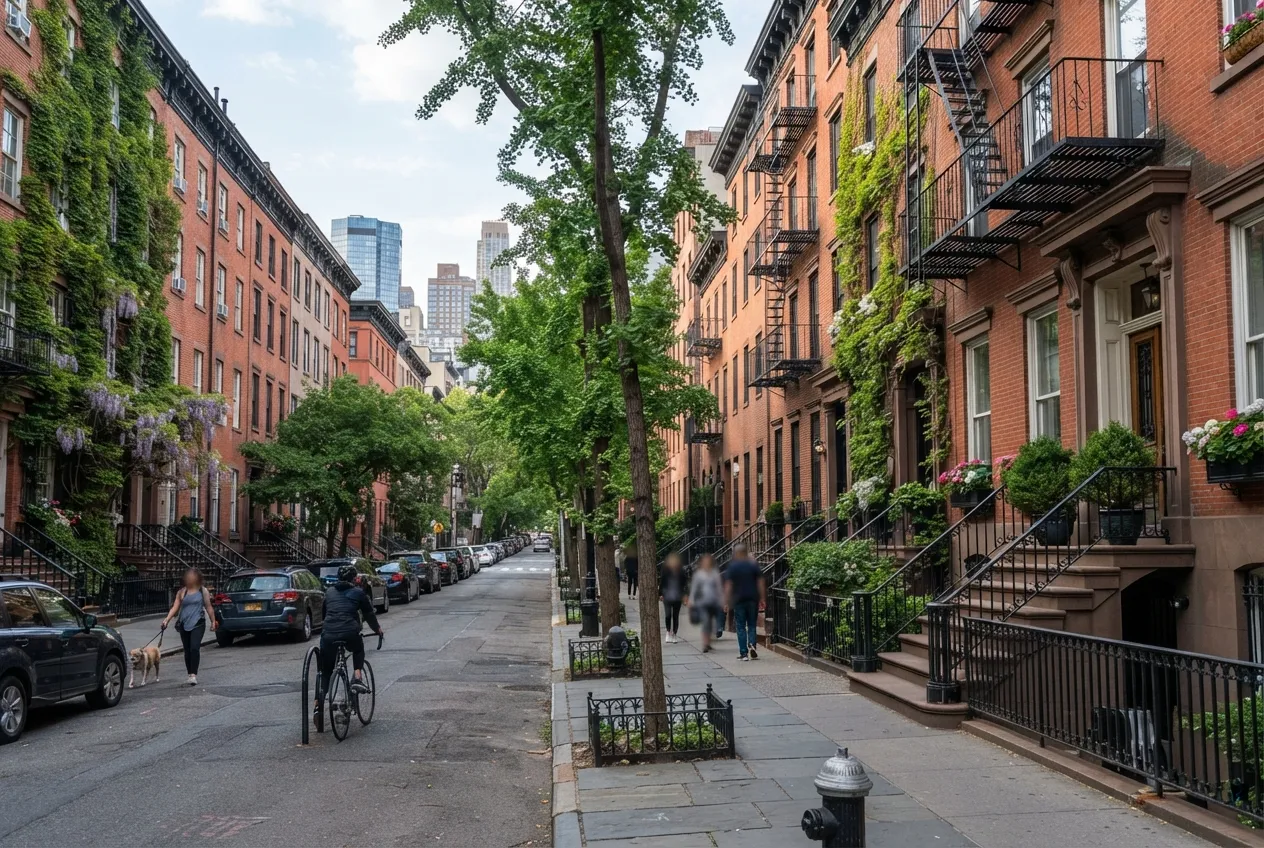
Many Greenwich Village homes have chimneys that have weathered a long run of winters, rooftop foot traffic and changes in how the building is heated. Brownstones, rowhouses, townhouses and pre-war apartment buildings often share flues, stacks and party walls, so a small crack or a failing liner can affect more than one household. Apex Premier Chimney Services repairs chimneys across Greenwich Village from our Manhattan office, about a mile away. Our certified technicians find the actual cause of the problem, explain it in plain terms, and fix what needs fixing without selling work you don't need.
Common Chimney Problems in Village Brownstones and Rowhouses
Older masonry chimneys in this part of Manhattan tend to fail in predictable ways. Water is the main culprit. Once it gets into brick and mortar, repeated freezing and thawing pushes joints apart and breaks off brick faces. A cracked crown or a missing cap lets rain run straight down the flue. Flashing where the chimney meets the roof loosens over time, and the leak often shows up as a stain on a top-floor ceiling or wall rather than at the chimney itself.
Inside the flue, liners crack from age, from heat, or from the acidic condensate that gas appliances produce. In buildings where several units or appliances vent through the same stack, a blockage or a broken liner tile is a safety concern for everyone in the building, not just one apartment.
- Crumbling or recessed mortar joints
- Brick faces flaking or popping off (spalling)
- Cracks in the chimney crown or a missing rain cap
- Water stains near the chimney on upper floors or ceilings
- Loose or rusted flashing at the roofline
- Tile fragments, debris or white staining in the firebox or at the base of the flue
- A leaning or visibly shifting chimney stack
Inspection Comes Before Repair
We don't quote a repair until we know what's wrong. The NFPA 211 standard calls for chimneys, fireplaces and vents to be inspected once a year, and it describes three inspection levels. A Level 1 inspection covers the readily accessible parts of the chimney when nothing about the system has changed. A Level 2 inspection is called for when the system changes, such as a new appliance or a switch of fuel, or when the home is sold, and it includes a closer look at the flue interior. A Level 3 inspection is used when a hidden hazard has to be reached by opening part of the chimney or the building.
Most Greenwich Village repair calls start with a Level 1 or Level 2 inspection. We show you what we found, including photos or camera footage of the flue, and then lay out the repair options so you can decide.
Flue Liners and Oil-to-Gas Conversions
Many pre-war buildings in the Village were built to burn oil or coal and later switched fuels. When a New York City building converts its boiler from oil to gas, the chimney has to be evaluated as part of the work. A new liner is often needed, because gas exhaust produces acidic condensate that can corrode a masonry flue that was never designed for it.
If your building is planning a conversion, or already converted and is now showing staining, debris or draft problems, we can inspect the flue and install a liner sized for the appliance it serves. For brownstones and townhouses with a working fireplace, we also repair or replace damaged liners so the fireplace can be used safely.
What Our Chimney Repair Work Covers
We match the repair to the damage, from a few failed joints to a full rebuild above the roofline. Typical work in Greenwich Village homes includes:
- Repointing mortar joints and replacing damaged brick
- Rebuilding or resurfacing cracked chimney crowns
- Installing or replacing chimney caps to keep out rain and animals
- Resealing or replacing flashing at the roofline
- Relining flues for fireplaces, boilers and water heaters
- Repairing firebox brick and dampers
- Rebuilding chimney stacks that have deteriorated above the roof
Timing Repairs Around Heat Season
New York City's heat season runs from October 1 through May 31, when building owners must keep apartments heated to the city's minimum temperatures. If the chimney serves a boiler, a liner or flue problem found in winter can put that heat at risk. Scheduling inspection and repair in late spring or summer gives you time to finish the work before the boiler has to run full time.
We also plan around the realities of Village buildings: narrow stairways, shared roofs, close neighbors and occupied apartments. We protect floors and fireplaces inside, keep debris contained on the roof, and coordinate with building management or neighbors when a stack is shared.
Serving Greenwich Village and Nearby Neighborhoods
Our crews work throughout Greenwich Village and nearby, including SoHo, Little Italy, Hudson Square, West Village and Gramercy. If you've noticed a leak, crumbling brick or a draft problem, or you're planning a fuel conversion, contact us to schedule an inspection.
More services in Greenwich Village
- Chimney Sweep in Greenwich VillageLocal service & repairs
- Chimney Inspection in Greenwich VillageLocal service & repairs
- Air Duct Cleaning in Greenwich VillageLocal service & repairs
- Chimney Liner Installation in Greenwich VillageLocal service & repairs