
The short answer
Chimney repair in SoHo usually means fixing masonry damage at the roofline, failed crowns and flashing, deteriorated flue liners, or broken dampers and caps. We inspect first, show you what we found, and repair only what the chimney needs. Our certified technicians work from our SoHo office and serve the surrounding Manhattan neighborhoods.
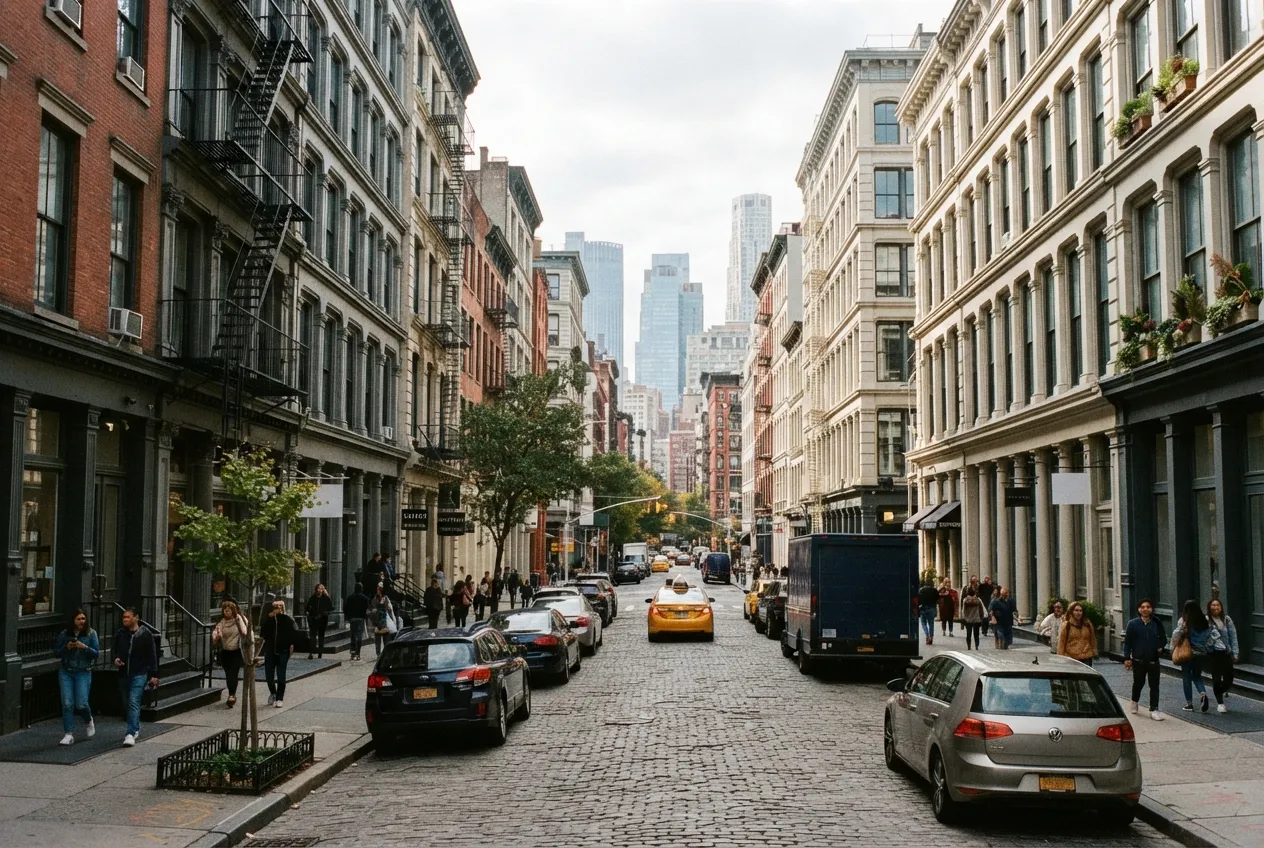
Apex Premier Chimney Services repairs chimneys in SoHo from our office at 113 Greene St. SoHo's housing stock includes converted loft buildings, older rowhouses and pre-war apartment buildings, many with masonry chimneys that have weathered decades of freeze-thaw cycles, roof work and changes in heating equipment. A chimney that looks fine from the street can still have cracked flue tiles, loose bricks near the roofline, or a crown that lets water into the structure. We find what is actually wrong, explain it in plain terms, and repair it so the chimney can safely carry smoke or exhaust out of your home.
Common Chimney Problems in SoHo Buildings
Most chimney damage we see in SoHo starts with water. Rain and melting snow get into porous brick and mortar, freeze in winter, and push the masonry apart. Over time that shows up as crumbling mortar joints, spalling brick faces, and stains on interior walls or ceilings near the chimney.
Older buildings in the neighborhood have also often been through several rounds of renovation. A roof replacement can leave flashing poorly sealed against the chimney, and a loft conversion may have added or removed fireplaces without the flue being updated to match. These are the issues we look for during a repair visit:
- Cracked or missing mortar joints and spalling brick, especially above the roofline
- Cracked or crumbling chimney crowns that let water into the flue and masonry
- Failed flashing where the chimney meets the roof, causing leaks inside
- Cracked, gapped or corroded flue liners
- Rusted or stuck dampers and missing or damaged chimney caps
- Water stains, efflorescence or damp odors near the fireplace
How We Approach a Chimney Repair
Every repair starts with an inspection. The NFPA 211 standard calls for chimneys, fireplaces and vents to be inspected once a year, and it describes three inspection levels. A Level 1 inspection covers the readily accessible parts of the chimney when nothing has changed. A Level 2 inspection is used when the system changes, such as a new appliance or a switch of fuel, or when the home is sold. A Level 3 inspection is reserved for situations where a hidden hazard has to be reached by opening part of the chimney or building.
After the inspection we walk you through what we found, with photos where possible, and explain which repairs affect safety and which are maintenance that can be planned. Typical work includes repointing mortar joints, rebuilding the top courses of brick, rebuilding or sealing the crown, resealing or replacing flashing, installing a cap, replacing a damper, and relining a flue.
Oil-to-Gas Conversions and Flue Liners
Many Manhattan buildings have moved, or are planning to move, from oil heat to gas. When a New York City building converts its boiler from oil to gas, the chimney has to be evaluated as part of the work. A new liner is often needed, because gas exhaust produces acidic condensate that can corrode an unlined or poorly lined masonry flue.
If your building has already converted and you are seeing loose material at the base of the chimney, white staining on the masonry, or moisture problems near the flue, the liner is worth checking. We can evaluate the existing flue and install a liner sized for the appliance it serves.
Timing Repairs Around Heat Season
New York City's heat season runs from October 1 through May 31, when building owners must keep apartments heated to the city's minimum temperatures. In buildings where the chimney serves the boiler, a chimney problem during those months can become a heating problem quickly.
For that reason, late spring and summer are practical times to schedule masonry, crown and liner work. Mortar and crown repairs also cure better in milder weather. If something fails during the heating months, we will tell you whether the system can keep running safely while a repair is arranged, or whether it should be shut down until the work is done.
Areas We Serve Near SoHo
Our office is in SoHo, ZIP code 10012, and we handle chimney repair throughout the neighborhood and nearby Manhattan areas, including Little Italy, Hudson Square, Tribeca, Civic Center and Greenwich Village. Whether you own a rowhouse, a loft unit with a working fireplace, or manage a pre-war apartment building with a boiler flue, we can inspect the chimney and recommend the repairs it needs.
More services in SoHo
- Chimney Sweep in SoHoLocal service & repairs
- Chimney Inspection in SoHoLocal service & repairs
- Air Duct Cleaning in SoHoLocal service & repairs
- Chimney Liner Installation in SoHoLocal service & repairs