
The short answer
Under the NFPA 211 standard, West Village chimneys should be inspected once a year and swept when soot, creosote or debris builds up. Apex Premier Chimney Services sends certified technicians to brownstones, rowhouses and pre-war buildings in 10014. It's best to schedule before the October heat season begins.
Many West Village homes still rely on chimneys built long before modern heating equipment. Whether you burn wood in a parlor-floor fireplace in a brownstone or your building's boiler vents through an old masonry flue, the chimney needs regular cleaning and a close look. Apex Premier Chimney Services sends certified technicians to homes throughout ZIP code 10014, about a mile northwest of our Manhattan office. This page covers what a sweep includes here, what we look for in older buildings, and how to plan the work around the heating season.
What a Chimney Sweep Covers
A sweep removes soot, creosote and debris from the flue, smoke chamber and firebox so smoke and exhaust can move up and out. Creosote is a byproduct of burning wood, and when it builds up on the flue walls it can ignite. Fallen mortar, leaves or nesting material can also narrow the flue and push smoke back into the room.
During a visit, a technician typically handles the following:
- Protects the floor and furniture near the fireplace before any work begins
- Brushes the flue from the firebox, the roof, or both, depending on access
- Cleans the smoke shelf, smoke chamber and damper area
- Checks that the damper opens, closes and seals properly
- Looks over the firebox, flue liner and visible masonry for cracks, gaps or missing mortar
- Explains what was found and whether anything needs follow-up
Chimneys in West Village Rowhouses and Brownstones
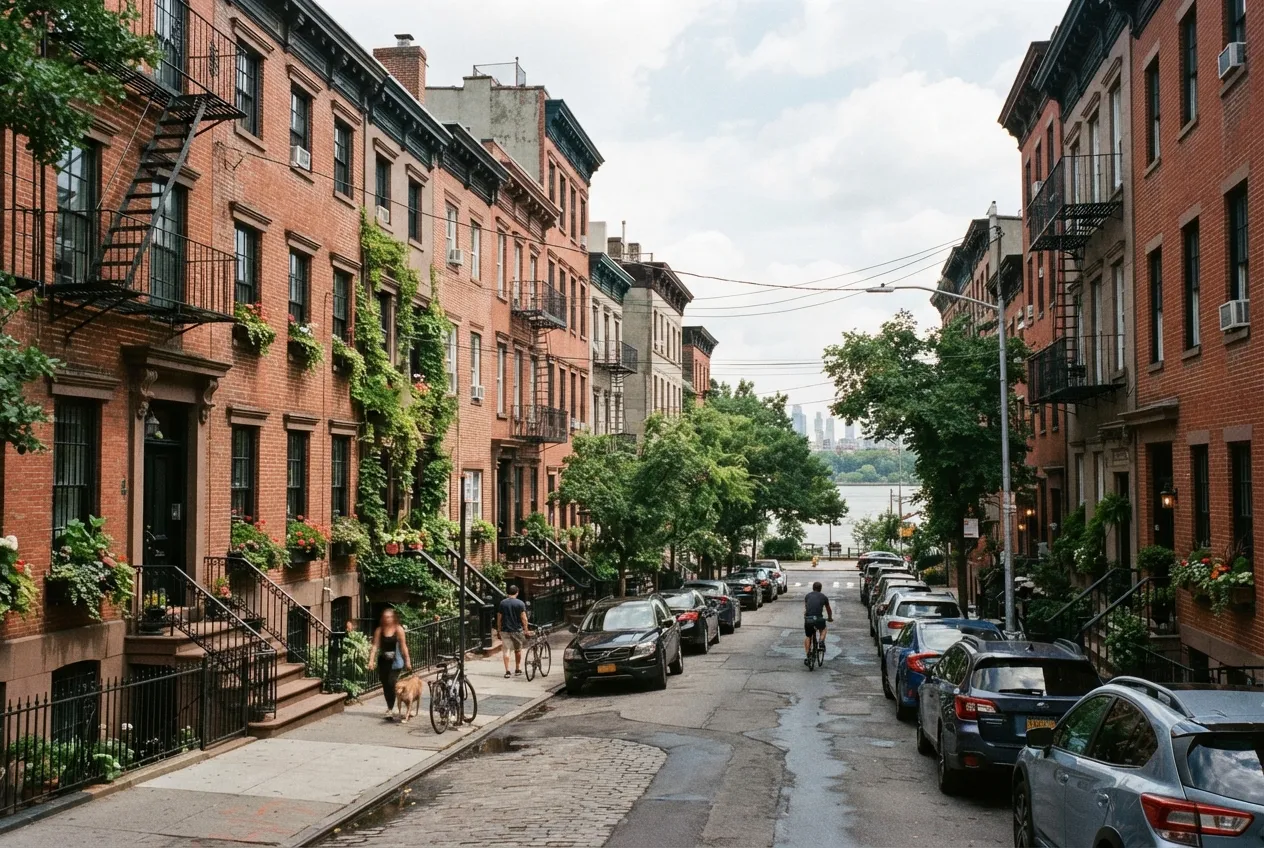
Much of the neighborhood's housing is made up of rowhouses, brownstones and pre-war apartment buildings. In these homes it is common to find several fireplaces stacked floor over floor. Each one usually has its own flue running up through a shared chimney. Some fireplaces have been closed for decades and then reopened. Some flues were never lined, and others have older clay tile liners that have cracked with age.
Rowhouses share walls with their neighbors, so a flaw in one flue can let heat or smoke reach places it shouldn't. That's why our technicians do more than clean. They note how many flues are in the chimney, which fireplace connects to which flue, and whether the liner looks intact along its length. If a fireplace hasn't been used in years, have it cleaned and inspected before you light the first fire.
Oil-to-Gas Conversions and Flue Liners
Many Manhattan buildings have switched their boilers from oil to gas. When a New York City building makes that switch, the chimney has to be evaluated as part of the work. A new liner is often needed because gas exhaust produces acidic condensate that can corrode a masonry flue over time.
If your building has converted or plans to, a sweep is a good time to look at the boiler flue as well as any fireplace flues. Soot left from years of oil firing should be cleaned out. The condition of the flue walls helps show whether the existing setup is suited to the new appliance. A change of fuel is also one of the situations that calls for a more detailed inspection.
How Often to Schedule a Sweep
The NFPA 211 standard calls for chimneys, fireplaces and vents to be inspected once a year. Whether the chimney also needs sweeping depends on what the inspection finds and how often you use it. Chimney professionals use three inspection levels:
New York City's heat season runs from October 1 through May 31, when building owners must keep apartments heated to the city's minimum temperatures. If you book your sweep in late summer or early fall, there is time to handle repairs before the boiler and fireplaces are in daily use.
- Level 1: the standard yearly check when nothing about the system has changed
- Level 2: when the system changes, such as a new appliance or a switch of fuel, or when the home is sold
- Level 3: when a hidden hazard has to be reached by opening part of the chimney or building
Working Carefully in Tight City Homes
West Village homes often have narrow stairways, finished interiors and limited roof access. Our technicians lay drop cloths and cover the fireplace opening to keep soot contained. If the job requires roof access, we arrange it ahead of time with you or your building's management. We also serve nearby Greenwich Village, SoHo, Little Italy, Hudson Square and Gramercy.
More services in West Village
- Chimney Inspection in West VillageLocal service & repairs
- Chimney Repair in West VillageLocal service & repairs
- Air Duct Cleaning in West VillageLocal service & repairs
- Chimney Liner Installation in West VillageLocal service & repairs